How do you get to the Bridge over the River Kwai?
How to get to the River Kwai from Bangkok?
The most convenient way to get to the Bridge over the River Kwai from Bangkok without a car is by train.
The journey takes approximately 3 hours.
The ticket costs ฿100–1000 depending on the class of carriage.
The direct train on the Thon Buri — River Kwai Bridge route departs twice a day and arrives at the Bridge over the River Kwai in 2 hours 57 minutes, including all transfers.
| Criterion | Score |
|---|---|
| Affordability of price | 7/10 |
| Wow factor | 8.5/10 |
| Safety | 8/10 |
| Physical difficulty | 9/10 |
| Historical value | 9.5/10 |
| Family accessibility | 7/10 |
| Transfer | 6/10 |
| Comfort | 7/10 |
What is the distance from Bangkok to the bridge over the River Kwai?
The distance from Bangkok to the Bridge over the River Kwai is 119 km in a straight line and 130.2 km by road.
The most convenient way to get there without a car is by train.
The train journey takes approximately 3 hours.
A train ticket costs ฿100–1000 (≈ $2.8–28) depending on the class of carriage.
How do I get to the bridge over the River Kwai?
To travel to the bridge over the River Kwai, use the train. Twice a day, trains depart from Bangkok Thonburi station, located on the western bank of the river in Bangkok, in the direction of the city of Kanchanaburi.
Stop at the «Bridge over the River Kwai» station, which is located on the Bangkok side of the bridge itself. This will allow you to reach your destination in just a few minutes' ride from Kanchanaburi.
The train crosses the bridge and then continues its way along the picturesque River Kwai, offering beautiful views.
How to get to the Bridge over the River Kwai from the nearest tourist cities of Thailand?
The bridge over the River Kwai is located in Kanchanaburi province, approximately 130 km west of Bangkok. The nearest tourist cities are Kanchanaburi (the closest, 5 km away), Bangkok, Pattaya, Ayutthaya and Nakhon Pathom. The most convenient way to get there is by train, bus, minivan or taxi; car rental is also popular.
From Bangkok
The distance is about 130 km, travel time 2–3 hours. The most picturesque option is the train along the «Death Railway» from Thon Buri station (Hua Lamphong or Krung Thep) to River Kwai Bridge (departures at 7:45 and 13:55, ticket ฿100–1000 ≈ $2.8–28, 2.5 h). Book train tickets in advance.
- Bus/minivan: From the Southern Bus Terminal (Sai Tai Mai) or Mochit to Kanchanaburi (฿250–400, 2–3 h), then a songthaew or taxi to the bridge (฿50–100).
- Car/taxi: 1.5–2 h along route 323, Grab or rental from ฿1000. Route on Google Maps.
From Kanchanaburi
This is the nearest city (5 km), the provincial center. To the bridge — 10–15 min.
- Songthaew (red pickups): From the market or terminal (฿20–50 ≈ $0.6–1.4).
- Train: Local services from Kanchanaburi station to River Kwai Bridge (฿100, 15 min).
- Taxi/Grab: ฿150–300.
- On foot/bicycle: 1 hour along the main road.
From Pattaya
The distance is 200+ km, 5–7 hours. Often via Bangkok.
- Bus + minivan: From Pattaya Bus Terminal to Mochit (2 h), then to Kanchanaburi (฿434–500 ≈ $12–14 in total, 6–7 h). Direct ones are rare, at 9:30 and 19:00 (7 h).
- Train via Bangkok: Bus to Bangkok, then train (from ฿500, 6–7 h).
- Car/taxi: 3.5 h, from ฿2000. Check transport schedules directly.
From Ayutthaya and Nakhon Pathom
Ayutthaya (120 km): bus or minivan to Bangkok, then train or car (2–3 h). Train is possible with a transfer.
Nakhon Pathom (60 km): Train directly to River Kwai Bridge (1.5 h, ฿50–950). Convenient for transit.
| City | Distance | Time | Price (THB) | USD | Best transport |
|---|---|---|---|---|---|
| Bangkok | 130 km | 2–3 h | 100–1000 | ≈ $2.8–28 | Train |
| Kanchanaburi | 5 km | 10–15 min | 20–300 | ≈ $0.6–8 | Songthaew |
| Pattaya | 200+ km | 6–7 h | 430–2000 | ≈ $12–55 | Bus+minivan |
| Ayutthaya | 120 km | 2–4 h | 668–2000 | ≈ $18–55 | Car |
Tips
The train over the bridge — at 6:00–18:00 (฿80). Avoid the heat (come in the morning/evening). Tickets are sold online and at the ticket office.
What happened to the bridge during the war?
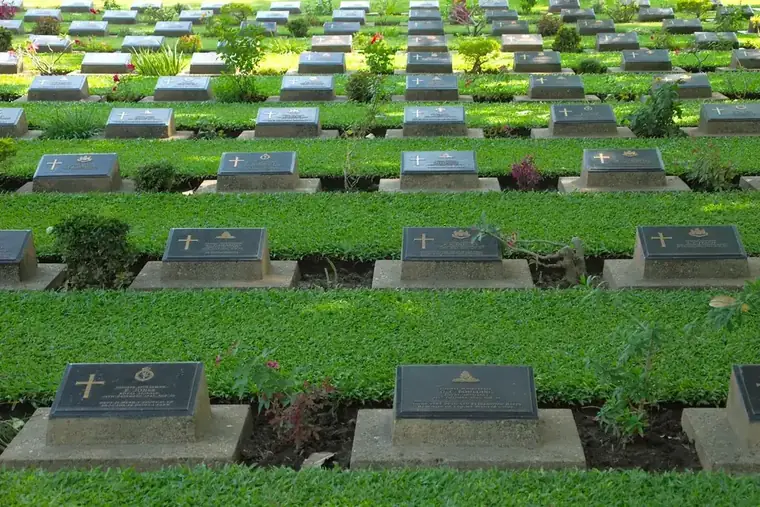
Was the bridge over the River Kwai destroyed?
Yes, the bridge over the River Kwai was destroyed.
Yes, the bridge over the River Kwai really was destroyed during the Second World War. In 1945 Allied aviation bombed the railway line and the bridge itself several times, because it was an important part of the Japanese transport network on the so-called Burma Railway. As a result of the bombings, the central spans of the bridge were seriously damaged and partially collapsed.
After the end of the war the bridge was restored. Part of the original structure was replaced, and some elements were preserved and repaired. Today's bridge in Kanchanaburi is a reconstructed version of the wartime structure. It continues to be used by the railway, and trains still pass over it.
Now the bridge has become a historical monument and one of the main attractions of Thailand. Tourists can walk across it on foot, see a passing train and visit the museums and memorials dedicated to the construction of the railway and the memory of the people who died during the war.
Why is the bridge over the River Kwai so famous?
The bridge over the River Kwai is famous above all for its history connected with the Second World War. It was part of a railway built by Japanese troops in 1942–1943 to connect Thailand and Burma (now Myanmar). This line was named the «Death Railway», because during its construction tens of thousands of Allied prisoners of war and Asian laborers died due to harsh working conditions, disease and lack of food.
The bridge gained worldwide fame after the release of the film «The Bridge on the River Kwai» in 1957, which won several «Oscar» awards. Although the plot of the film is partly fictional, it was precisely this that made the place a symbol of the tragic history of the war and the suffering of the people who built the railway.
Today the bridge is located in the city of Kanchanaburi and is one of the most famous historical attractions of Thailand. Tourists come here to walk across the bridge, see a passing train, visit the museums and war cemeteries dedicated to the memory of those who died during the construction of the railway.
What happened to the bridge over the River Kwai?
The bridge over the River Kwai was built during the Second World War in 1942–1943 by the Japanese army. It was part of the Burma Railway, which connected Thailand and Burma (modern-day Myanmar). The labor of Allied prisoners of war and tens of thousands of Asian workers was used for the construction. The conditions were extremely harsh: people worked in the jungle, suffered from disease, lack of food and cruel treatment, which is why the railway was named the «Death Railway».
In 1945 the bridge became a target of Allied bombings. Allied aviation attacked the railway line several times in order to halt the supplies of the Japanese army. As a result of the bombings, part of the bridge's structure was destroyed, especially the central spans.
After the end of the war the bridge was restored. The damaged elements were replaced with new metal structures, and railway traffic over it was resumed. Today the bridge over the River Kwai in the city of Kanchanaburi is a historical monument and one of the most famous attractions of Thailand. Trains still pass over it, and tourists can stroll across the bridge and see the place connected with a tragic page in the history of the Second World War.
So where is the real bridge over the River Kwai?
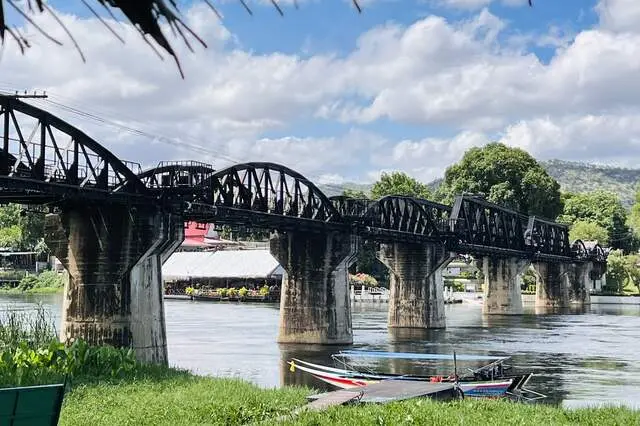
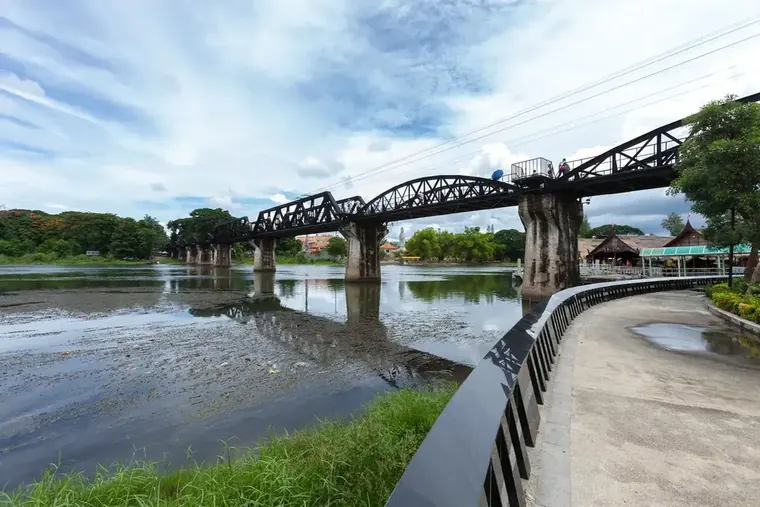
The real bridge over the River Kwai is located in the city of Kanchanaburi in the west of Thailand, approximately 130 kilometers from Bangkok. It is situated on the Khwae Yai River, which after the release of the famous film gained international fame under the name «River Kwai». It was precisely here that part of the Burma Railway, built by the Japanese army during the Second World War, ran.
Originally the bridge was built over another river — the Mae Klong, but after the success of the film «The Bridge on the River Kwai» the authorities of Thailand renamed this stretch of the river Khwae Yai, so that it would be easier for tourists to find the historic place. Thus, the modern bridge in Kanchanaburi is considered to be that very «bridge over the River Kwai», although the name of the river changed only after the war.
Today the bridge is open for visits. The railway still passes over it, and tourists can walk along its wooden decking, watch the passing trains and visit the museums and memorials beside it. This place has become one of the main historical symbols of the Second World War in Southeast Asia and a popular attraction of Thailand.
The bridge in film
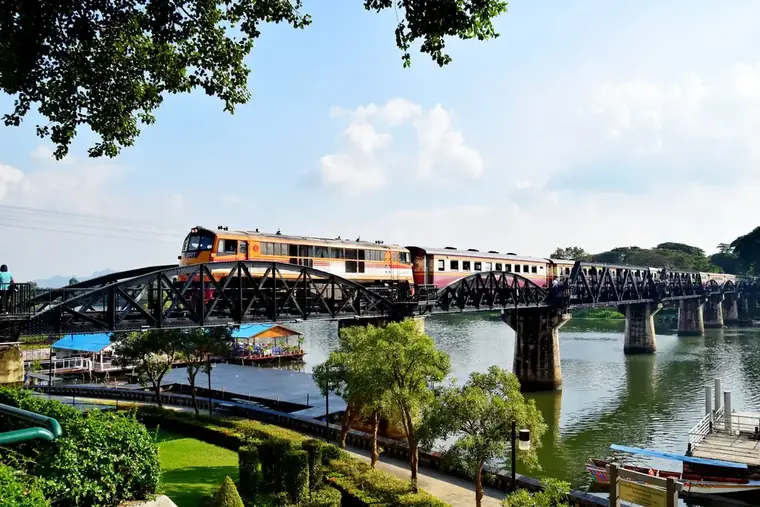
Key point
The 1957 film was not shot at this bridge: filming took place in Sri Lanka (then Ceylon). The real Bridge over the River Kwai in Kanchanaburi is the historical one, but it is not the bridge audiences saw on screen.
Was the bridge over the River Kwai really built for the film?
For the filming of the movie «The Bridge on the River Kwai» a bridge really was built.
The cinematic adaptation was shot in Sri Lanka, then known as Ceylon.
The key scene was realized on a structure erected especially for the filming over the Kelani River, in the area of Kitulgala.
What is the film «The Bridge on the River Kwai» about?
The film «The Bridge on the River Kwai» tells of the events of the Second World War and of the construction of a railway in the jungles of Thailand, which the Japanese troops forced Allied prisoners of war to build. The main characters are British soldiers who were captured by the Japanese army and sent to build the bridge over the River Kwai.
The plot is focused on the conflict between the Japanese camp commandant and the British colonel Nicholson. The Japanese demand that the captured officers take part in hard labor, but Nicholson refuses, citing military rules. After a long standoff, he nevertheless agrees to organize the construction of the bridge, believing that the British must maintain discipline and demonstrate their skill even in captivity.
Meanwhile, a group of Allies plans a sabotage operation to destroy the strategically important bridge and prevent the Japanese from using the railway. In the finale the tension reaches its climax, when the sabotage plans collide with the pride of the colonel, who perceives the bridge as a symbol of the honor and professionalism of his men.
The film shows not only the military history, but also complex moral questions: duty, honor, the absurdity of war and the psychological pressure on people in extreme conditions. It became one of the most famous war films and won several «Oscar» awards.
Is the plot of The Bridge on the River Kwai based on real events?
The film «The Bridge on the River Kwai», based on the real history of the construction of the Thailand-Burma railway during the years of the Second World War, contains considerable fictional elements. Although the historical events served as inspiration, the plot of the picture represents a dramatized version rather than a literal recreation of the facts. The reality of the construction was far harsher and more tragic than is shown in the cinematic work. The film artistically interprets the events, adding fictional characters and storylines to create a more dramatic effect.
| Fact | Value |
|---|---|
| Year built | 1943 |
| Recommended time for the visit | 1.5 h |
| Average annual temperature | +28 °C |
| Hours of peak attendance | 10:00–12:00 |
What was the famous quote from The Bridge on the River Kwai?
In the film «The Bridge on the River Kwai» (1957), one of the most famous lines is considered to be the phrase uttered at the very finale of the story. The character Major Clipton, having seen the destroyed bridge and the consequences of what has happened, exclaims: «Madness! Madness!», which in Russian translates as «Безумие! Безумие!». This short phrase sums up the entire drama and symbolizes the absurdity and destructive nature of war.
Another memorable line is heard almost simultaneously with this scene. Colonel Nicholson, realizing that his striving for discipline, pride and the construction of the perfect bridge actually helped the enemy, utters the words: «What have I done?» — in Russian «Что я наделал?». This phrase reflects the moment of the hero's tragic realization and becomes the climax of the entire story.
What is there to see at the bridge today?
Can you visit the bridge over the River Kwai?
The bridge is open to the public: you can walk across it on your own and free of charge, and an organized excursion is only one of the options.
The excursion includes a walk across the historic bridge built during the Second World War.
You will be able to enjoy the picturesque views of the river and take a ride on a local train.
The program also includes a visit to the museums and cemeteries dedicated to the history of the prisoners of war.
This allows for a deep reflection on the historical significance of the place and the tragic events of the past.
Kanchanaburi offers a unique opportunity to touch history.
The journey promises to be enlightening and emotional.
Can you cross the bridge over the River Kwai on foot?
Crossing the bridge over the River Kwai on foot is possible. Heightened caution should be exercised due to the presence of numerous gaps alongside the single-track railway bed. To ensure safety, it is necessary to give way to approaching trains by stepping back to a safe distance. This bridge, being an infrastructure object, requires careful crossing, especially in conditions of active railway traffic.