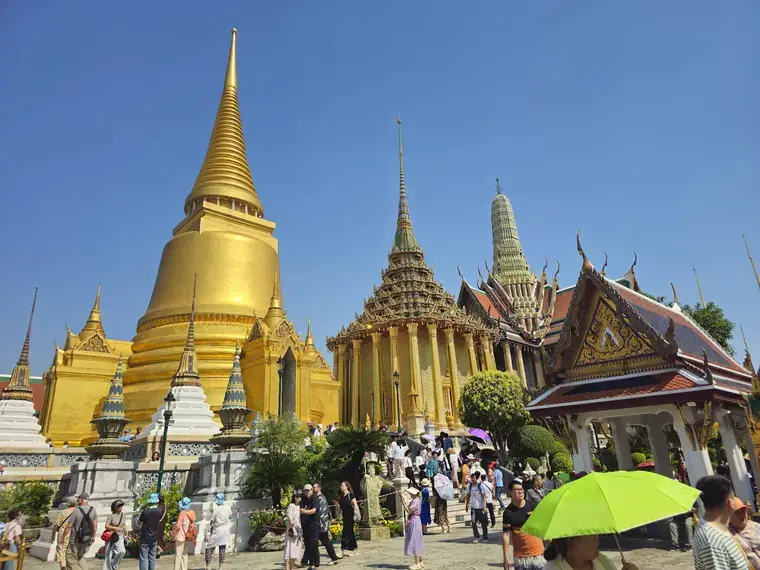
Imagine: you stand before a colossal statue of the Buddha, so enormous it barely fits within the temple space, while across the road lies the sacred heart of an entire kingdom, home to the tiny yet most venerated image of the Emerald Buddha. Can a majestic giant, famed for its ancient school of massage, compete with a sanctuary wrapped in centuries of mystery and the symbols of monarchy?
This is exactly the choice travelers often face in Bangkok when it comes to two of the city's most iconic gems: the Temple of the Reclining Buddha, or Wat Pho, and the Temple of the Emerald Buddha, or Wat Phra Kaew.
This dilemma is no accident. Located just a few steps from each other, both temples are must-see destinations, yet they offer entirely different experiences. Many who plan their holiday at the scenic resorts of Thailand and include the capital in their busy tour often get confused or underestimate the fundamental difference between these shrines.
For whom is this choice most critical? Above all, for those with limited time for excursions, for families with children for whom not only cultural value but also fun matters, and for tourists striving to understand the essence of Thai culture as deeply as possible. The difference between them is what decides which temple fits your journey through Thailand best.
Pros and cons: Temple of the Reclining Buddha (Wat Pho)
Pros
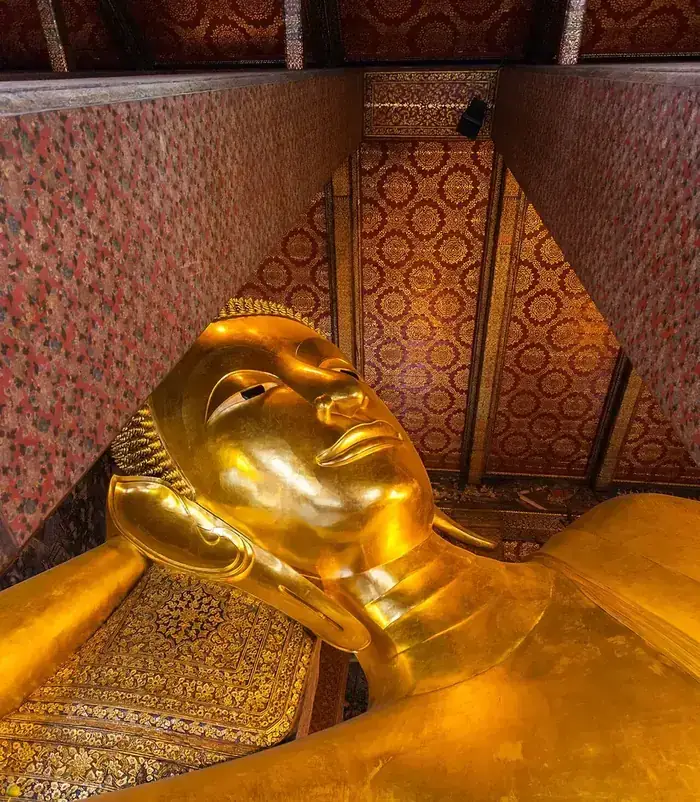
- Huge statue of the reclining Buddha
- Opportunity to attend a session of traditional Thai massage
Cons
- Crowds during peak hours
- Large grounds require a lot of time to explore
Pros and cons: Temple of the Emerald Buddha
Pros
- The main religious shrine of Thailand
- Exceptional architectural beauty of the complex
Cons
- Strict dress code for clothing
- High cost of the entrance ticket
Wat Pho or Wat Phra Kaew: which to choose?
Tip
Start with Wat Phra Kaew (the main Buddhist shrine of Thailand), then walk to Wat Pho for the Reclining Buddha and Thai massage. Allow 1.5–2 hours per temple; both stand on the same bank of the Chao Phraya River.
Wat Pho or the Emerald Buddha: Where to go?
Choose Wat Pho if you want to see the grandiose statue of the reclining Buddha and enjoy the atmosphere of tranquility. Head to the Temple of the Emerald Buddha if you are looking for a richly decorated temple and wish to see the most venerated statue in Thailand.
Verdict: what to choose
The choice between Bangkok's two main shrines depends solely on what impressions you want to take away from Thailand. If you are looking for scale, a calm atmosphere for contemplation, and the opportunity to touch the history of an ancient medical center, your decision is obvious. Wat Pho offers a deep immersion in the spiritual life of the city, where you can spend several hours in silence among gardens and unusual architectural forms, without feeling constant haste.
On the other hand, if your goal is to see the pinnacle of Thai craftsmanship, the gleam of gold, and to plunge into the atmosphere of royal pomp, you should head to the heart of the Grand Palace. This place represents the quintessence of Thai aesthetics, where every square meter is decorated with astonishing detail. Such a visit is more like a trip to an open-air museum, requiring a readiness for large numbers of people and strict observance of the visiting rules.
- Choose the Temple of the Reclining Buddha (Wat Pho) if you value a more relaxed pace of the stroll, want to see one of the most impressive statues in the world without having to pass through tough security checks, and are also interested in the basics of Thai medicine and traditional massage.
- Choose the Temple of the Emerald Buddha if you want to take the most striking photographs against dazzling architecture, strive to touch the main national symbol of Thailand, and prefer to visit sites of state significance that embody the power and wealth of the monarchy.
Comparing the two temples
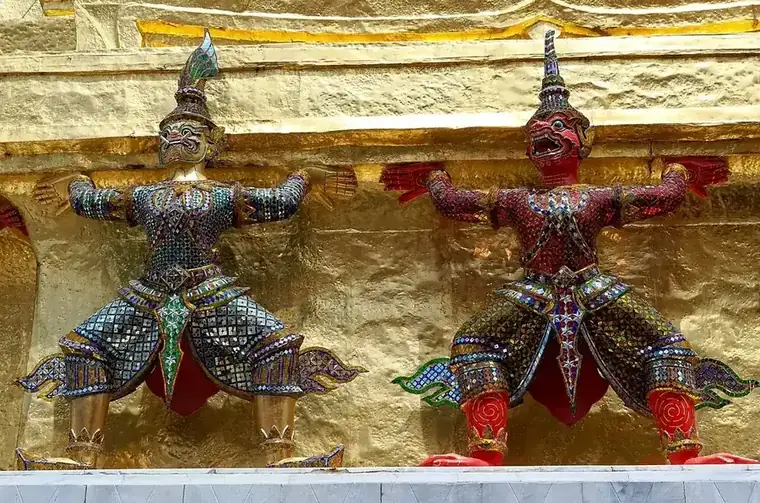
Comparison of Bangkok's main temples
| Criterion | Temple of the Reclining Buddha (Wat Pho) | Temple of the Emerald Buddha (Wat Phra Kaew) |
|---|---|---|
| Vibe/Atmosphere | Calm, meditative | Majestic, solemn |
| Season | November — February | November — February |
| Entry (foreigners) | ฿300 | ฿500 (together with the Grand Palace) |
| Budget | Low | Medium |
| Who it suits | Families, couples, history lovers | Families, couples, cultural tourists |
| Accessibility | Easy (metro and river boat) | Easy (on foot from Wat Pho) |
The noise of the crowd or grandeur in silence: Immersion in the atmosphere of Wat Pho and Wat Phra Kaew
Atmosphere is the soul of any place, and in this regard Wat Pho (the Temple of the Reclining Buddha) and Wat Phra Kaew (the Temple of the Emerald Buddha) offer entirely different yet equally impressive experiences. Unlike Wat Phra Kaew, where from the very first steps a sense of grandiose majesty seizes you, emphasized by the shine of golden spires and the abundance of carved details, Wat Pho greets you with a more intimate, almost homely atmosphere.
While in Wat Phra Kaew solemnity and sacred awe dominate, Wat Pho invites calm contemplation and immersion in history. Here, among the numerous chedis and statues, you feel quiet wisdom rather than dazzling brilliance.
However, it must be admitted that the popularity of Wat Phra Kaew sometimes turns into a tangible pressure of the crowd, which can somewhat blur the impression of its monumental beauty, while in Wat Pho, despite the presence of tourists, it is easier to find a secluded corner for reflection.
The impressions of these two temples are made up of many details, starting with the very “wow effect.” Wat Phra Kaew delivers it instantly, the moment you step onto its grounds: the tiny statue of the Emerald Buddha possesses an inimitable energy, and the striking richness of architecture and decoration makes an indelible impression.
Whereas Wat Pho captivates gradually, revealing its charm in the details. Of course, the main “star” here is the giant statue of the Reclining Buddha, but the value of this place lies not only in it.
It is also the ancient chedis decorated with ceramic tiles, and the vast grounds where the first school of Thai massage was once located. While in Wat Phra Kaew you feel like a witness to royal splendor, Wat Pho gives a sense of immersion in living history and ancient traditions, where every stone and every statue has its own story.
Convenience and value for the visitor also differ. Wat Phra Kaew, being part of the Royal Palace complex, has stricter visiting rules and, as a rule, a higher entrance ticket, which is fully justified by its status. However, its well-organized infrastructure and clear signage make the tour relatively simple, despite the heat and the flows of people.
Wat Pho, in turn, offers a more accessible immersion in the atmosphere, and its role as a historical and medical center gives it additional value. Here there are more opportunities for a more leisurely tour, and the chance to see how tourists and locals undergo training in Thai massage adds uniqueness.
It is worth noting that in both temples it can be very hot, and it is important to take care of headwear and a sufficient amount of water, especially during peak visiting hours, when the flow of people becomes most intense.
At Wat Pho you can drop coins for free into 108 bowls (a tradition); the ticket includes water.
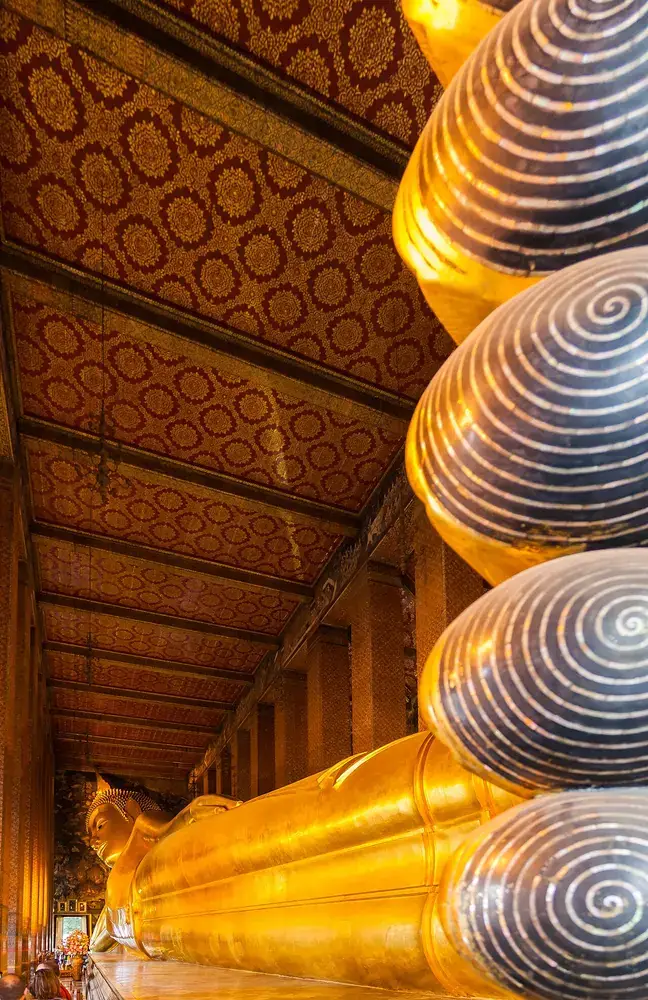
How much does entry cost?
The finances of spirituality: how much do Bangkok's main shrines cost
Bangkok knows how to surprise not only with golden spires, the scent of incense, and the slow rhythm of prayers, but also with a very different approach to the price of a spiritual experience. In one place, entry is free, and you pay only for flowers, candles, or your own wish to make a donation.
In another, a visit turns almost into a full museum ticket: with temples, relics, panoramas, historical halls, and strict dress code rules. That is why talking about Bangkok's shrines is not only about faith and architecture, but also about a very practical question: how much does it cost to touch the sacred city.
The most expensive and most prestigious point on this route is the Grand Palace and the Temple of the Emerald Buddha, Wat Phra Kaew. For foreigners the ticket costs ฿500 (≈ $14), and it includes a visit to the Grand Palace complex itself, the Temple of the Emerald Buddha, and the Queen Sirikit Museum of Textiles. For Thai citizens entry is free upon presentation of an ID.
This is an important reference point: it is here that spirituality is most closely intertwined with monarchical history, state symbolism, and ceremonial architecture, which is why the price here is higher than at most other shrines in the city. In essence, you pay not for one temple, but for access to the country's main sacred and ceremonial space.
A bit more “down to earth,” but still a must for most travelers, is Wat Pho, the Temple of the Reclining Buddha. The temple's official page lists a fee of ฿300; children under 120 cm tall enter free.
Wat Pho is interesting in that its cost is already perceived by many not as a symbolic temple offering, but as a ticket to a major cultural complex: people come here for the giant statue of the Reclining Buddha, the historic stupas, the courtyards, and the temple's famous connection with the tradition of Thai massage. In monetary terms, this is no longer “dropping in to light incense,” but a full-fledged world-class attraction.
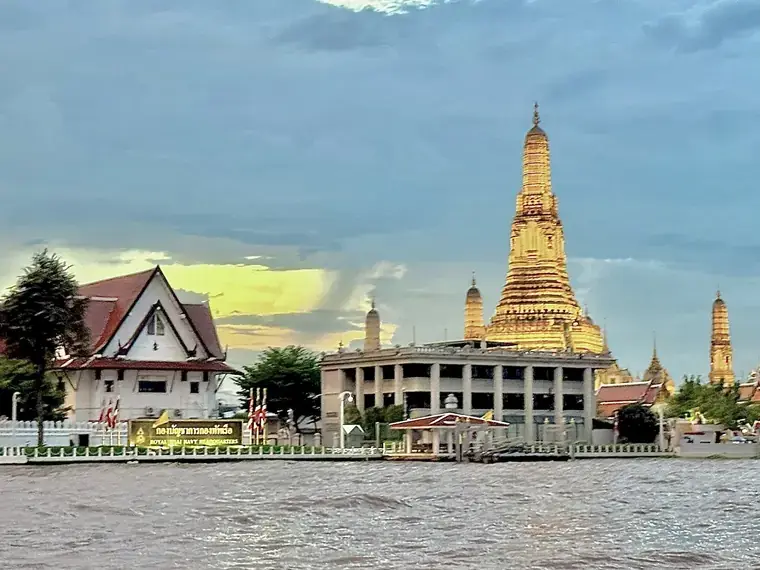
Another temple from the obligatory “golden triangle” of old Bangkok is Wat Arun, the Temple of Dawn. According to the Tourism Authority of Thailand, entry costs ฿200. This is an important figure, because many travelers remember the old prices and are surprised by the increase.
Wat Arun sells not only the sanctity of the place, but also one of the most recognizable silhouettes in Thailand: the central prang, the porcelain decor, the view of the Chao Phraya River, and an almost ready-made postcard of Bangkok. In financial terms, this is an example of how a temple in the tourist capital becomes at once a religious space, a historical monument, and a visual brand of the city.
If you want a cheaper shrine but with a strong effect, a good example is Wat Saket, better known as the Golden Mount. According to current 2026 guidebooks, entry for adult foreigners is about ฿50, while children under 120 cm enter free.
Here the price is noticeably lower than at the “big three,” but the experience does not look any poorer at all: you pay for the climb up the spiral staircase, for the atmosphere of the old hill-temple, for the bells, the trees, the wind, and for one of the best views of old Bangkok. The Golden Mount nicely shows that in Bangkok spirituality sometimes costs very little, if the temple is not built into the city's main tourist icon.
More modest in price but very expressive in meaning is Wat Ratchanatdaram with Loha Prasat, the “Metal Castle.” According to the Tourism Authority of Thailand, entry is ฿20. Against the ฿500 of the palace, this is almost a symbolic sum.
And it is here that the contrast of Bangkok is especially noticeable: one temple works as a national showcase, while another remains surprisingly accessible and calm. For ฿20 the visitor gets not only rare architecture with dozens of metal spires, but also a sense that sanctity here is still closer to everyday urban religiosity than to the mass tourism industry.
A separate story is Wat Traimit, the Temple of the Golden Buddha in Chinatown. Current sources agree that viewing the statue itself costs about ฿40, while visiting the museum part and historical exhibitions requires about ฿100 more.
In other words, the minimum entry can be very affordable, but if you want to understand the context, the history of the discovery of the golden statue, and the role of the Chinese quarter, the budget of the visit grows. This is a good example of a “layered” price: the shrine as an object of veneration costs little, while knowledge, museum context, and tourist packaging are paid for separately.
But Bangkok would not be Bangkok if its entire sacred world lived only by ticket logic. There are places where there is no entry fee as such. The most famous example is the Erawan Shrine, one of the most visited urban shrines in the center of the capital. The Tourism Authority of Thailand lists the shrine's hours — daily from 06:00 to 20:00, and current guides note that entry is free.
Here you can pay only for offerings: flowers, incense sticks, candles, wooden elephants, or, if you wish, for a ritual dance in gratitude for a granted request. In such places it is especially clear that “the finances of spirituality” in Bangkok are often built not on a ticket, but on a voluntary act of participation.
Looking more broadly, Bangkok's shrines have several price tiers. The first is free or almost-free places, where the main expenses are connected with offerings. The second is affordable temples for ฿20–50, where you pay rather for the upkeep of the grounds and access to special architecture or a panoramic point. The third is the mid-range tourist segment around ฿200–300, which includes Wat Arun and Wat Pho.
And finally, the premium sacred-state level — the Grand Palace and Wat Phra Kaew for ฿500. This ladder of prices reflects well not the degree of “sanctity,” but the degree of touristic, historical, and symbolic concentration of the place.
There are also hidden costs that many remember only on site. These are not so much tickets as the accompanying economy of pilgrimage and tourism: water in the heat, a taxi or boat between temples, renting or buying more covering clothing if the dress code is not met, donations, incense, flowers, coins in luck bowls, and sometimes audio guides or museum add-ons.
Because of this, a “day of temples” in Bangkok almost always costs more than it seems from the sum of the entrance tickets. Formally you can go through part of the route very cheaply, but in practice the sacred geography of the city gradually adds up to a tangible tourist bill.
And yet there is a logic to this. Bangkok does not make you pay equally for faith. It seems to offer several models of contact with a shrine. You can enter almost for free and simply stay silent before the altar. You can, for 20 or ฿50, get a beautiful but not yet commercialized experience. You can, for ฿200–300, enter temples where religion is already closely intertwined with world tourist fame.
And you can pay ฿500 for the main ceremonial heart of the Thai capital, where faith, history, and state representation are inseparable. That is exactly why the finances of spirituality in Bangkok are not about expensiveness as such, but about how the city values access to its most symbolic spaces.
If we speak quite practically, then in 2026 the reference point for Bangkok's main shrines looks like this: ฿500 for the Grand Palace and Wat Phra Kaew, ฿300 for Wat Pho, ฿200 for Wat Arun, about ฿50 for the Golden Mount, ฿20 for Loha Prasat, about ฿40 for the main entrance to Wat Traimit plus ฿100 for the museum part, and ฿0 for entry to the Erawan Shrine, not counting voluntary offerings.
Such a breakdown shows well that spiritual Bangkok can be seen both as an expensive ceremonial capital and as a city where sanctity still remains accessible.
How do you get there?
A transport quest or a stroll: how to get to Bangkok's main shrines
The question of transport accessibility becomes a defining factor when planning a visit to the historic center of Thailand's capital. Wat Pho, located a little aside from the epicenter of royal bustle, offers tourists more predictable logistics: you can easily drive up to its gates by taxi or tuk-tuk without having to break through the security cordons typical of the Grand Palace.
Unlike the Temple of the Emerald Buddha, where, due to the strict access regime, taxis often drop passengers a few hundred meters before the entrance, Wat Pho can be reached in maximum comfort practically right up to the ticket office, which significantly saves energy in the conditions of debilitating heat.
If at Wat Pho the logistics look like a calm drop-off in a tourist zone with developed infrastructure, then the transfer to the Temple of the Emerald Buddha resembles a well-tuned but overloaded operation.
Here strict security protocols apply, restricting the movement of vehicles, which is why the length of the “last mile” on foot increases, and the cost of a taxi ride may be higher due to idling in traffic jams at the checkpoints. While the accessibility of Wat Pho ensures high speed of movement, the Temple of the Emerald Buddha requires the traveler to allow time for passing through the inspection and for the walk along the perimeter of the walls.
The resulting level of comfort when visiting Wat Pho turns out to be higher due to the absence of multi-level checks, whereas it is better to reach the shrine of the royal temple by river boat to the nearest pier, which ensures a smoother and safer journey, bypassing the road jams.