Can you take island-hopping trips from Koh Samui?
Yes, island-hopping trips from Koh Samui are possible. The island is an excellent starting point for exploring neighbouring tropical destinations.
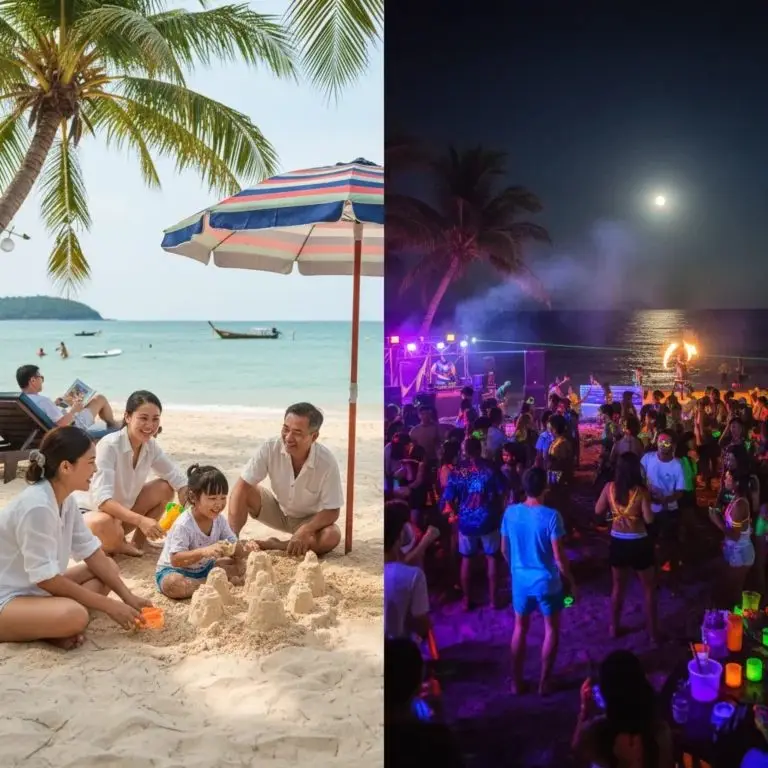
You can easily reach such picturesque islands as Koh Tao, known for its diving, and Koh Phangan, famous for its beaches and parties. Travel between these islands is carried out regularly by ferries and speedboats.
Koh Samui offers developed infrastructure for travel, including ports and tourist agencies that organise sea crossings.
Price affordability 7.5/10 Wow factor 8/10 Safety 7/10 Physical difficulty 8/10 Historical value 5/10 Family accessibility 8.5/10 Transfer 7/10 Comfort 8/10
How is the name of Samui island translated?
The name of Samui island has a deep historical and cultural origin, which many connect with its key role in the past. The commonly accepted theory states that “Samui” comes from the Malay word “Saboey”.
This word, translated as “safe haven”, describes incredibly accurately the importance of the island for ancient seafarers and trading vessels. For centuries Samui served as a reliable refuge from storms and a strategically important stopover on the busy sea routes. Such an interpretation emphasises the historical value of the island as a hospitable and protected place amid the raging sea expanses.
When is it best not to go to Samui?
In short — the worst time to go to Samui is from October to mid-December. But to understand why, it is important to understand a little about the seasonality of this particular region.
Samui is located in the Gulf of Thailand, and its climate differs from that of Phuket and the Andaman coast. Here the main rainy season is shifted to the end of the year.
From October to December is the peak of the monsoons. During this time there are often prolonged rains, the sea becomes rough, strong waves and grey skies are possible. This does not mean that it rains around the clock, but it can rain for a long time and regularly, and sunny days become rare. It is precisely in November that the weather is considered the most unstable: there are downpours, storms, and restrictions on sea travel.
Also during this period the “picture” of the holiday suffers. The water can be murkier, the beaches less pleasant, and excursions to neighbouring islands are sometimes cancelled due to the weather. If you are counting on classic “postcard” Thailand with a turquoise sea and sun — this season may disappoint.
There is also a second, less obvious period — September and early October. This is the transition to the rainy season. The weather can still be quite good, but it is already becoming more unpredictable: short but heavy downpours and variable cloudiness.
At the same time it is important to understand: Samui is rarely completely “unsuitable” for a trip. Even in the rainy months there are sunny windows, prices are lower, there are fewer tourists, and the atmosphere is calmer. But if the goal is an ideal beach holiday, swimming every day and sea excursions, it is better to avoid exactly the end of autumn.
It is optimal to go from January to August, and the ideal balance of weather is roughly February–June.
What should you beware of on Koh Samui?
Be extremely careful when renting a scooter: accidents on the island happen often because of the difficult terrain and narrow roads. Always use a helmet and objectively assess your driving skills, especially in rainy weather or at night.
Avoid transport problems: when choosing a taxi or tuk-tuk, always agree on a fixed price for the trip in advance, as drivers often overcharge tourists. Plan your movements in advance so as not to depend on random carriers and not to overpay for services on the spot.
Which month is best to avoid Koh Samui?
If you had to choose one specific month when it is best to avoid Koh Samui, it would be November.
It is precisely in November that the island usually experiences the peak of the rainy season. At this time prolonged downpours occur most frequently, the sky can be overcast for several days in a row, and the sea becomes rough. Because of the waves, sea excursions are sometimes restricted or cancelled, the visibility of the water deteriorates, and a classic “picture-perfect” holiday with a turquoise sea and sun becomes a rarity.
October and December can also be unstable, but November is the riskiest month from the point of view of weather. If the purpose of the trip is the beach, swimming and beautiful views, it is better to give it a wide berth.
In all the other months Samui is much more predictable, especially from February to June.
Which islands are closest to Koh Samui?
In the immediate vicinity of Koh Samui lie a number of remarkable islands, each of which offers unique opportunities for an active holiday. Among the most popular and accessible destinations stand out Koh Phangan, known for its unique atmosphere and events, as well as Koh Tao, especially attractive for lovers of diving and snorkelling. Nearby is also the picturesque Koh Nang Yuan, often visited as part of one-day excursions. In addition, it is worth noting the islands that are part of the Ang Thong National Marine Park, which offer breathtaking natural landscapes and wide opportunities for various kinds of active recreation. These islands provide a rich spectrum of impressions, from dynamic nightlife to the secluded enjoyment of pristine nature.
In which part of Samui is it best to holiday?
The eastern part of Samui — the leader in visitor numbers, offering wide beaches, an abundance of restaurants and lively nightclubs. This is the ideal choice for those who value a dynamic holiday and a rich evening life.
The northern coast is preferred by families. This area is famous for its calm and tranquillity. Tropical vegetation descending to the very water creates picturesque landscapes.
In which part of Koh Samui is it best to stay?
Lamai and Chaweng are considered the most sought-after areas for a comfortable holiday on Samui. These locations attract travellers with wide sandy beaches, developed infrastructure and a high density of tourist services.
The choice of accommodation here is extremely varied: from budget guesthouses to modern resort hotels. Thanks to the high competition between accommodation options, in these areas it is easiest to find options with the optimal price-to-quality ratio. Chaweng is ideal for those looking for a lively atmosphere and nightlife, while Lamai offers a calmer but still rich environment for a quality holiday.
Can you swim in the Gulf of Thailand?
You can swim in the Gulf of Thailand all year round. The consistently high water temperature, holding at the mark of +30°C, creates ideal conditions for a beach holiday regardless of the season. The resorts of the region are ready to receive tourists at any time, ensuring comfortable access to the sea. Seasonal weather changes practically do not affect the possibility of swimming, which makes the gulf one of the most reliable destinations for beach tourism in Southeast Asia.
On which side of Koh Samui are the best beaches?
Chaweng Beach, located on the north-eastern coast of the island, is rightly considered the epicentre of Samui's tourist life. This beach is the longest on the island: its snow-white shoreline stretches for seven kilometres.
Thanks to its developed infrastructure and convenient entry into the water, Chaweng has become the most popular and lively place for a holiday. It is precisely here that the majority of hotels, restaurants and entertainment venues are concentrated, which makes the area an ideal choice for those who prefer to be at the centre of events. Despite the high density of holidaymakers, the development of the location justifies its title as one of the best beaches of the region.
Which beach on Samui is the cleanest?
Chaweng Noi is rightly considered one of the cleanest and most comfortable beaches on Samui island. It is an ideal place for those looking for a calm atmosphere and seclusion away from the noisy tourist locations.
The shoreline here is covered with fine light sand, and the entry into the water is gentle and safe, which families with children especially value. The sea is distinguished by its transparency and the absence of sharp stones or corals underfoot. The beach infrastructure is developed enough to ensure a full holiday, while preserving a cosy and relaxed atmosphere. If you put the cleanliness of the shore and the quality of the sea water at the forefront, Chaweng Noi will be the best choice on the island.
What is the rainy season on Koh Samui?
The rainy season on Koh Samui differs from most resorts in Thailand and falls in the end of the year — roughly from October to December.
The most pronounced period is November, when the rains become frequent and prolonged. At this time prolonged downpours, overcast weather and a rough sea are possible. The waves can intensify, because of which sea trips and excursions to neighbouring islands are sometimes restricted.
October is considered the beginning of the rainy season: the weather becomes more changeable, the amount of precipitation increases, but there are still sunny days. December is a transitional month: in the first half rains are possible, and closer to the end the weather gradually stabilises.
At the same time it is important to understand that even in the rainy season on Samui continuous precipitation rarely lasts all day — more often it is an alternation of rain and clear spells. However, if the goal of the trip is stable sunny weather and a calm sea, this period is considered the least fortunate.
The best time for a holiday on Samui is from January to August, when there is less precipitation and the sea is calmer.
Are there sharks in the Gulf of Thailand?
Sharks inhabit the Gulf of Thailand, as they do in many other waters of Thailand. Nevertheless, cases of shark attacks on people are extremely rare. The main part of the marine fauna is represented by species that pose no danger to swimmers. Travellers can be at ease when visiting both the Gulf of Thailand and the Andaman Sea, since an encounter with aggressive sharks is practically excluded.
What sharks are found in the Gulf of Thailand?
The Gulf of Thailand is inhabited mainly by species of sharks that are safe for humans, and encounters with them occur quite rarely. Most often you can come across small reef sharks here, such as blacktip and whitetip, which lead a cautious way of life and avoid people. Bamboo sharks are also found in the waters of the gulf — bottom-dwelling and slow, posing practically no danger — as well as catsharks, which are distinguished by their small size and secretiveness. Sometimes, though very rarely, you can see a whale shark — the largest fish in the world, which feeds on plankton and is absolutely safe for humans. On the whole the Gulf of Thailand is considered a calm and safe region: large predatory sharks are almost never found here, and cases of attacks are extremely rare.
What interesting facts can you learn about Koh Samui?
Koh Samui, with an area of about 228 km², is known as «a safe haven», which is reflected in its name, deriving from the Malay word «Saboey».
This once modest fishing island has undergone a significant transformation.
Today Koh Samui is a dynamically developing tourist centre.
Every year it attracts millions of travellers from all over the world.
The island's successful transformation testifies to its attractiveness and potential.
features of Samui island?
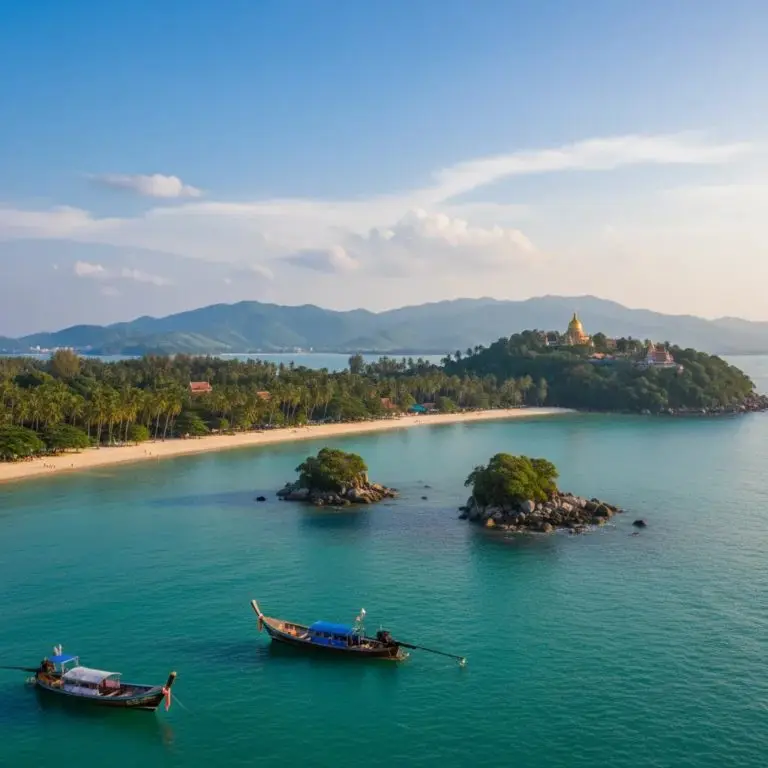
Samui island — a picturesque corner of Thailand with snow-white beaches, tropical palms and striking rock formations. The main geographical feature of the resort lies in the calm sea: thanks to its location in the gulf, there are practically no strong waves here throughout the year, which makes it an ideal place for comfortable swimming.
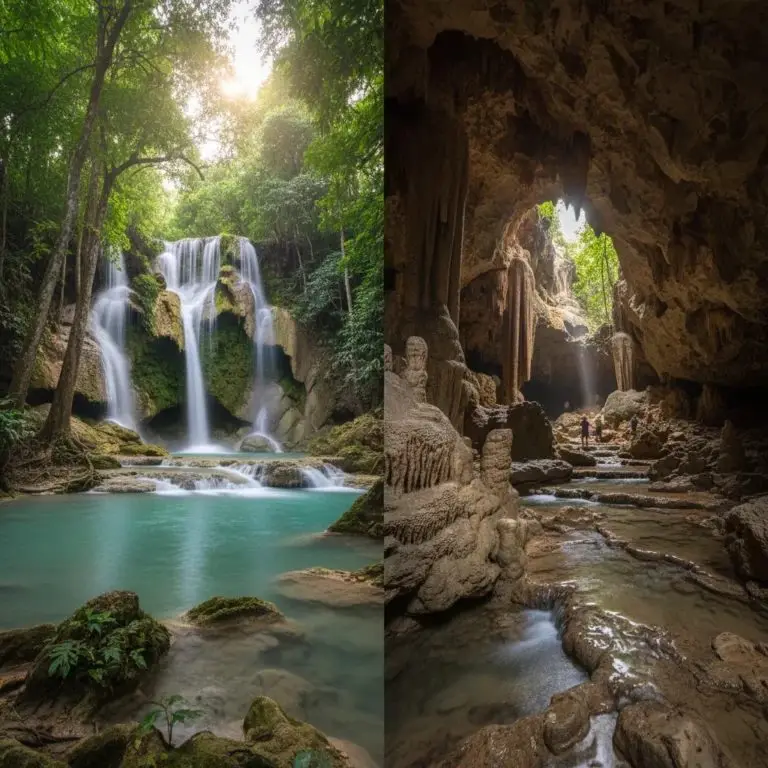
The island's infrastructure harmoniously combines natural attractions, including cascading waterfalls, and an active nightlife. This destination is perfect both for a secluded holiday and for visiting noisy parties. The consistently warm weather and the developed tourist base make it possible to explore the surrounding islands and protected areas comfortably at any time of year.
In which month is it best to go to Samui?
The ideal time to visit Samui — the period from April to September. In these months the island pleases with stable sunny weather and a calm sea, which makes it an excellent alternative to the west coast of Thailand, where storms are often observed in the summer season.
From October to December the rainy season lasts on the island. During this period there is a high probability of prolonged precipitation, so the trip is suitable only for those who are ready for unpredictable weather for the sake of significant discounts on accommodation. Plan your holiday based on these climatic features, so as to avoid disappointment.
How was Koh Samui formed?
Koh Samui was formed as a result of large-scale tectonic processes that began about 230 million years ago. In that era the territory of modern Thailand was under a mass of shallow sea. In the course of the active shifting and movement of the earth's crust, the seabed gradually rose, gradually forming the mainland part of the land. This complex geological uplift also led to the separation and formation of the surrounding islands, including the island of Koh Samui. Thus, today's landscape of the island is a direct consequence of the global tectonic transformation of the region.
Which gulf is Samui in?
Samui island is located in the south-western part of the Gulf of Thailand, which is part of the South China Sea. This popular resort destination belongs to the province of Surat Thani and is part of the Kingdom of Thailand.
Geographically the island is washed by the warm waters of the Gulf of Thailand, providing comfortable conditions for swimming practically throughout the year. This region is famous for its sandy beaches and developed tourist infrastructure. Choosing a holiday on Samui, tourists visit precisely this gulf, which surrounds the island on all sides.
Duration Recommended time for sightseeing 6 h. Temperature Average annual temperature +28 °C Area What territory the site occupies 228.7 sq. km Tourist flow Number of tourists (thousand/day) 2.5 thousand Peak load Peak visiting hours 10:00 - 15:00
What is the main natural attraction of Samui?
On Samui island, among its numerous treasures, a special place is held by the Wat Plai Laem Temple. This extensive religious complex is rightly considered one of the largest and most significant architectural attractions. Wat Plai Laem is a unique collection of structures, distinguished by their expressive aesthetics and deep symbolism. Its territory unites many buildings that preserve the spirit of Thai culture and Buddhist traditions. Thanks to its grandeur and interesting architecture, it is a key point of attraction for tourists wishing to get acquainted with the spiritual heritage of the island.
Route to the place: Koh Samui,Surat Thani,Thailand Go
The rainiest month on Samui?
On Samui island the rainy season usually falls in the period from October to the end of December, sometimes encompassing the beginning of January.
The most abundant precipitation falls in November.
It is important to note that rainy weather does not mean constant downpours.
Most often there are periods of intense rains, which can last several days in a row.
After such precipitation, sunny weather often sets in, lasting several days.
Thus, November is the peak of the rainy season, but the nature of the precipitation is changeable.
Are there sharks in the vicinity of Koh Samui?
In the waters of Samui sharks are encountered rarely, however their presence is recorded in the area of the Ang Thong National Marine Park and on the islands adjacent to it. The most likely place for an encounter with marine predators is the island of Koh Tao.
In the shallows of Koh Tao reef species of sharks dwell, which in their natural environment usually display caution and pose no pronounced threat to tourists. These marine inhabitants are a natural part of the local ecosystem, so their appearance near popular dive spots is considered a natural phenomenon.
How do you get to the islands of the Gulf of Thailand?
To get to the popular islands of the Gulf of Thailand — Samui, Phangan and Tao — the logic of the route is always roughly the same. First you get either to Samui, which has an airport, or to the mainland (Surat Thani, Don Sak or Chumphon), and from there you transfer to a ferry or a high-speed catamaran. These islands are well connected to each other and to the mainland, so the route is easily combined to suit budget and time.
From Bangkok to Samui
The simplest and fastest way is a direct flight to Samui. This is the most comfortable option: you fly straight to the island and head to the hotel immediately without additional transfers.
A more budget-friendly alternative is to get to Surat Thani (by plane, train or bus), then transfer to a shuttle to the Don Sak pier and from there a ferry to Samui. This option takes more time but allows you to save significantly.
From Bangkok to Phangan
Here there are two main scenarios. The first is a flight to Samui, and then a short ferry to Phangan. This is the most convenient way.
The second is via the mainland: train, bus or plane to Surat Thani, then a shuttle to Don Sak and a ferry to Phangan. Such a route is cheaper and popular with travellers on a limited budget.
From Bangkok to Tao
For Koh Tao the route via Chumphon is most often used. You get there by train, bus or plane, after which you transfer to a high-speed catamaran to the island.
A route via Samui or Phangan is also possible, but it is usually used if you are travelling around several islands in a row, rather than going directly.
From Phuket to the islands
From Phuket it is most convenient to take a combined ticket bus + ferry. Such routes already include all the transfers and save you from having to connect transport yourself.
An alternative option is a flight to Samui, but it is more expensive and used less often.
From Chiang Mai
From Chiang Mai people most often fly south with a transfer in Bangkok. The most convenient route is a flight to Samui.
If you want to save, you can fly to Surat Thani and then continue the journey by bus and ferry. A fully overland route from Chiang Mai is usually too long and tiring.
How to choose the best option
If speed and comfort matter — choose a flight to Samui. If the priority is saving money — routes via Surat Thani or Chumphon with a ferry will do. If you are going to Koh Tao — the route via Chumphon is most often optimal. If you are planning to visit several islands — it is convenient to build the route via Samui and continue further by ferries.
An important nuance
Ferries and catamarans depend on weather conditions. Rough seas can affect the schedule and comfort of the trip, so you should not plan tight connections with international flights on the same day.
Useful web resources
Official website of the Koh Samet ferries — schedule and prices
12Go.Asia — online ticket booking-
GetYourGuide — organised tours and transfers in the Gulf of Thailand-
Life-Thai.com — detailed guides in Russian
Frequently asked questions (FAQ)
When is the best time to go to Samui island?The best time to go to Samui is from February to June — at this time the most stable sunny weather prevails, minimal rains and a calm sea.
How does Samui differ from the other islands of the Gulf of Thailand?Samui combines developed infrastructure with quality hotels and pristine nature, offering a balance between an active holiday and seclusion.
Which islands are worth visiting in the vicinity of Samui?Be sure to visit the Ang Thong National Marine Park with its lagoons, as well as the islands of Phangan and Tao, which are famous for their magnificent diving and snorkelling.
What is the easiest way to get to Samui?The fastest way is a direct flight to Samui airport; you can also fly to Surat Thani and then travel by bus and ferry.