What unusual secret place exists in Thailand?
One of the most unusual hidden places in Thailand is Sam Phan Bok in Ubon Ratchathani province. This is a unique rocky area on the bank of the Mekong, where over many years the water has created thousands of hollows, niches and bizarre shapes in the sandstone. Thanks to this, the landscape looks almost alien, and the place itself is often compared to a miniature canyon.
The special feature of Sam Phan Bok lies in its seasonality. It is best to come here in the dry period, when the water level drops and the rock formations are fully revealed. At this time you can see the unusual relief in all its beauty, especially at dawn and dusk, when the surface of the rocks is tinted with warm golden hues.
This place is suitable for those who want to see in Thailand not only the famous beaches and islands, but also a truly rare natural location with an unusual atmosphere.
Price affordability 7/10 Wow factor 8.5/10 Safety 7/10 Physical difficulty 8/10 Historical value 6/10 Family accessibility 7/10 Transfer 7.5/10 Comfort 6.5/10
What unknown facts are there about Thailand?
Non-obvious facts about Thailand: Right now it is the year 2569 in the country according to the Buddhist calendar. Islam takes second place in prevalence among religions. The orchid is recognized as the national flower. The Thai alphabet is among the largest in the world. The state is governed by a monarch. A significant volume of fish exports is directed to Japan, China and Australia. A key element of Thai philosophy is often called the concept of "never mind."
What authentic places are there in Bangkok?
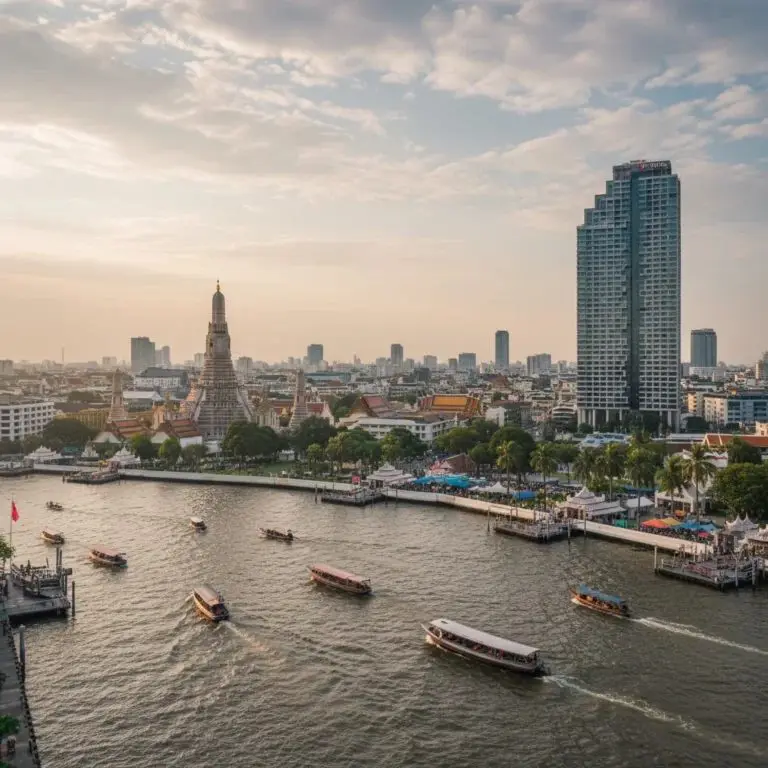
Authentic Bangkok offers a rich variety of cultural and historical sites. Attention should be paid to the Jim Thompson House Museum, which is an example of traditional Thai architecture. The Bangkok Art and Culture Centre represents a modern focus of the city's creative life. The historical spirit is felt on Khao San Road, despite its popularity with tourists. An architectural masterpiece is the Wat Suthat temple with its famous Giant Swing. One cannot ignore the color of Chinatown and its temple complexes. The vast Chatuchak Market is a place for immersion in local trade. For relaxation in nature there is Vachirabenchatat Park, although shopping centers are also an integral part of the modern metropolis.
What is a strange fact about Thailand?
The unique position of Thailand among the countries of Southeast Asia lies in its unwavering independence.
Unlike its neighbors, Thailand is the only country in the region that has never been subjected to European colonization.
This fact emphasizes its special historical trajectory.
The name of the country, Prathet Thai, which translated from Thai means "land of freedom," directly reflects this historical feature.
Its sovereignty became the guarantee of preserving its own culture and identity.
This makes Thailand an outstanding example of statehood in the context of the colonial era.
The country successfully resisted foreign domination, preserving its integrity.
This independence is a key aspect of national identity.
https://yandex.com/maps/-/CPbMbG9v
How to get to the unexplored places of Thailand?
The path to the little-known corners of Thailand most often consists of several stages. Usually the journey begins with arrival in Bangkok, which serves as the main transport point for further movement around the country. After this, the route continues by a domestic flight, train or intercity bus to the nearest large city or the administrative center of the province. Already on the last stretch of the road, a rented car, private transfer, taxi, local transport or a boat is most often used. It is precisely this scheme that most often leads to those places that are not part of the standard tourist routes.
For trips to remote natural locations, it is most convenient to first get to the nearest province by plane. This saves time and allows you to reach the desired destination faster. The train is suitable for those who prefer a more measured route and want to see the country along the way, while the bus remains one of the most affordable options in terms of price. However, it's important to take into account that neither the train nor the bus usually takes you directly to the hidden natural places. They only help you reach the nearest city, after which you need to think through the final leg separately.
In practice, the route to such locations is usually built according to the scheme: Bangkok, then the provincial center, after this a local transfer and already at the end a short walking, car or boat segment. This is especially characteristic of the northern mountain regions, the northeastern provinces, the river territories and the lesser-known island destinations. The more remote a place is considered, the higher the probability that the final leg of the journey will be the least convenient, but it is precisely this that leads to the most unusual views and untouched corners of the country.
Using the example of Sam Phan Bok, the route looks exactly like this. First you get to Ubon Ratchathani province, which is located in the northeast of Thailand. From Bangkok you can fly there by domestic flight, come by train or by bus. After arrival in the city of Ubon Ratchathani, the path continues by car toward the Pho Sai district. Further on, the transfer to the natural area itself is made. For such destinations a car is especially convenient, because public transport rarely goes directly to the entrance of such places.
When planning a trip to the unexplored places of Thailand, it is especially important to take the season into account. Many natural points are revealed only at a certain time of year. In the dry season the roads become easier, the water level drops, and access to the viewpoints, rock formations and river zones becomes more convenient. In the rainy season part of the routes may turn out to be less comfortable, and some natural sites look completely different or are partly hidden under water. Therefore, before the trip it's important to take into account not only the distance, but also the climatic conditions of the region.
For the journey to go smoothly, it is better to plan the route in advance and in stages. First, the nearest large city is determined, then the way to get there is thought through, and only after this is the question of the last leg of the road resolved. In remote areas you should not always count solely on public transport, since the schedule may be limited, and the transfers not the most convenient. That is precisely why, for trips to the little-known places of Thailand, combined routes that combine plane, bus, train and private transfer are most often the best fit.
The unexplored places of Thailand are rarely accessible by a direct and simple route. But it is precisely this multi-stage road that makes the trip more interesting. First a large city opens up, then a less touristy province, after this — small roads, local villages, river banks or mountain sections. As a result, the journey turns not just into movement toward a point on the map, but into a full-fledged acquaintance with a different, lesser-known side of Thailand.
Getting to Unexplored Thailand: main routes from the tourist cities
Unexplored Thailand is a concept of traveling around the lesser-known attractions and provinces of Thailand, including national parks, waterfalls, mountain areas and non-touristy villages. The main routes start from the main tourist centers: Bangkok, Phuket, Krabi and Chiang Mai.
Routes from the main tourist centers
Tourist city Main destinations Travel time Bangkok Khao Yai National Park, Nakhon Nayok province, Phayao 2-3 hours by bus Phuket Khao Sok National Park, Khao Lak reserve, Chumphon province 3-4 hours Krabi Hong Islands, Koh Lanta island, Khao Sok National Park 30 minutes — 2 hours Chiang Mai Doi Inthanon National Park, Phayao province, Chiang Rai, mountain villages 1.5-3 hoursMain destinations of unexplored Thailand
Northern Thailand (Golden Triangle region): Phayao province and the surrounding villages are known for their mountain landscapes and authentic culture. Buses run from Chiang Mai at intervals, a ticket costs about 300 Thai baht (780 rubles). Doi Inthanon National Park is located at an altitude of 2565 meters and offers temple complexes and waterfalls.
Central Thailand: Khao Yai National Park is located 2-3 hours from Bangkok. Buses go here from the Mo Chit bus terminal every half hour, the cost of a ticket is about 180 Thai baht. Lopburi province is famous for its temples and historically significant sites.
Southern Thailand: Khao Sok National Park with Cheow Lan lake is one of the most beautiful natural attractions. The Khao Lak reserve near Phuket and Chumphon province offer unusual landscapes and a minimum of tourists.
Transport options
- Buses: The main way of moving between cities. Tickets can be bought at local bus terminals or through 12Go Asia
- Domestic flights: From Bangkok to Chiang Mai (1 hour of flight), the fastest option for visiting the northern regions
- Private taxis and minivans: To get to the villages it is recommended to hire a private driver or rent a scooter
- Boats and ferries: For access to the Hong Islands and Koh Lanta from the port cities of Krabi
Best time to visit
The optimal season for exploring unexplored Thailand is October-February, when the weather is cooler and drier. During this period there is less precipitation and it is more comfortable for walks through the mountain regions and national parks.
Practical tips
- Use reliable sources of information about transport and routes before setting off
- Book accommodation in advance in provincial hotels that are less known to tourists
- Take comfortable footwear with you for walking routes and adequate clothing for the humid climate
- Take into account that in remote areas there is less tourist infrastructure, so take cash with you
- Communicate with the locals — they will give you tips about hidden attractions and authentic places
«`
Thailand Cultural Centre MRT stationMetro station in Bangkok