Gran Canaria is often called a continent in miniature, and the phrase survives because the island really does change every twenty minutes of driving: dunes in the south, pine forest and volcanic rock in the middle, a city with a surf beach in the north. What the phrase hides is that a good part of the island has no road at all, and the coast west of Mogán is the clearest case.
This guide splits the sights into the ones you drive to and the ones that only exist from the sea, and puts a price on the second half.
A good part of the island has no road. Güigüí, the caves west of Mogán and the reef off the harbour are reached only from the water — budget one boat trip for them; the rest you can drive to.
What you see from the road
The Maspalomas dunes are the one thing nobody skips: a field of sand between the resort and the sea, walkable in the early morning before the surface heats. Roque Nublo stands in the middle of the island, a volcanic plug reached by a short climb from the pass road.
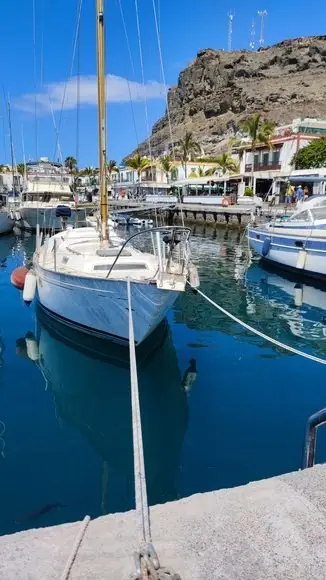
Las Palmas in the north has Las Canteras, a long urban beach protected by a natural reef bar. Puerto de Mogán, in the south-west, is the village whose streets are cut by small canals — and, usefully for a day plan, it is also a working harbour, and several of the trips below leave from its quays.
What has no road?
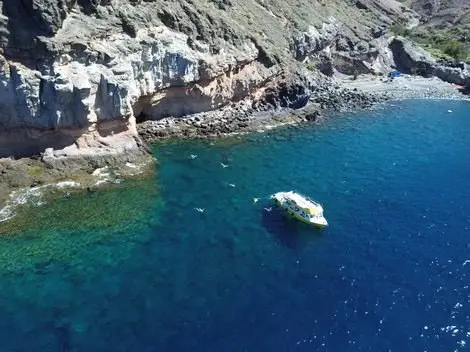
Güigüí is the argument for getting on a boat. It sits on the west coast under cliffs, and the only ways in are a long walk over the ridge or an approach from the sea. The four-hour yacht trip from Puerto de Mogán with Aqua Fun is €125 per person for up to eighteen guests, with swim and snorkel stops, cold drinks and crew.
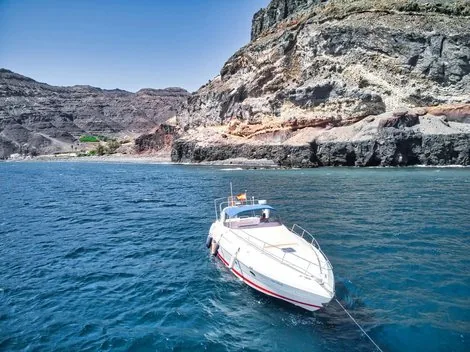
The second thing without a road is the seabed. Off Puerto de Mogán there is an artificial reef of 350 structures spread over 3,000 square metres, and the way to look at it without a licence is the Atlántida submarine at €38 per adult, taxes included, in a 44-seat submersible with a free bus from the southern resorts on reservation.
The third thing without a road is the line of caves in the cliffs west of Puerto de Mogán. There is no path down to them; you go in from the water. RockNatour paddles two-seat kayaks inside on a four-hour trip with snorkelling and optional rock jumps at €65 per person, ages 16 to 55, with guide, kayak, life vests, snorkel kit, insurance and photos included.
What does the sea cost here?
| Format | Harbour | Price | Length |
|---|---|---|---|
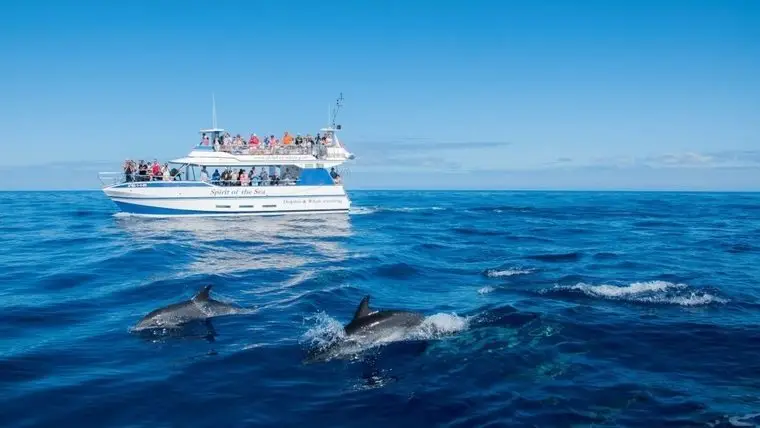
| Whale and dolphin watching, glass-bottom catamaran | Puerto Rico | from €25 per person | 2.5 h |
| Dolphin excursion, Líneas Salmón | Puerto Rico, Mogán, Anfi, Arguineguín | €35 adult, €25 child 6–12 | 2 h |
| Submarine to the artificial reef | Puerto de Mogán | €38 adult | — |
| Catamaran with swim stop and lunch | Puerto Rico | €55 from age 11 | 4 h |
| Boat trip with snorkelling and lunch | Puerto de Mogán | €59 adult, €45 child 3–11 | 3 h |
| Yacht to Güigüí | Puerto de Mogán | €125 per person | 4 h |
Under the surface without a submarine
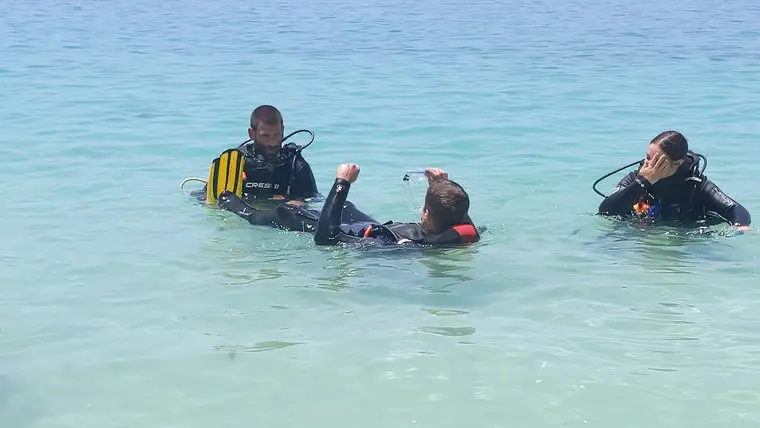
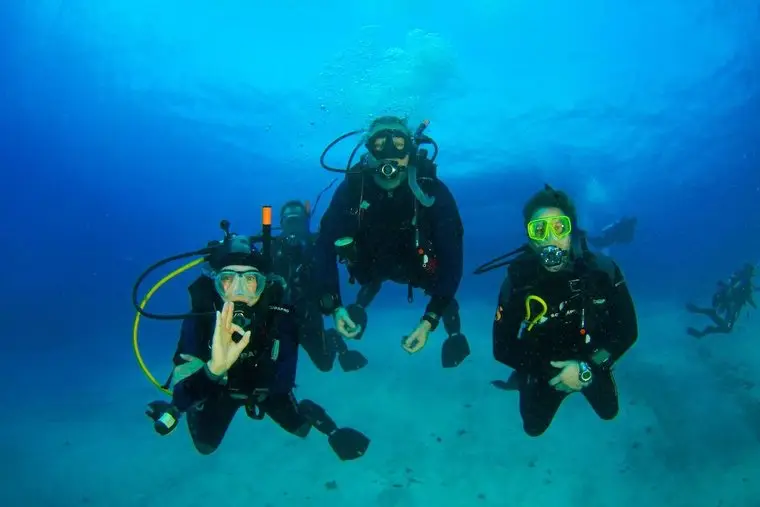
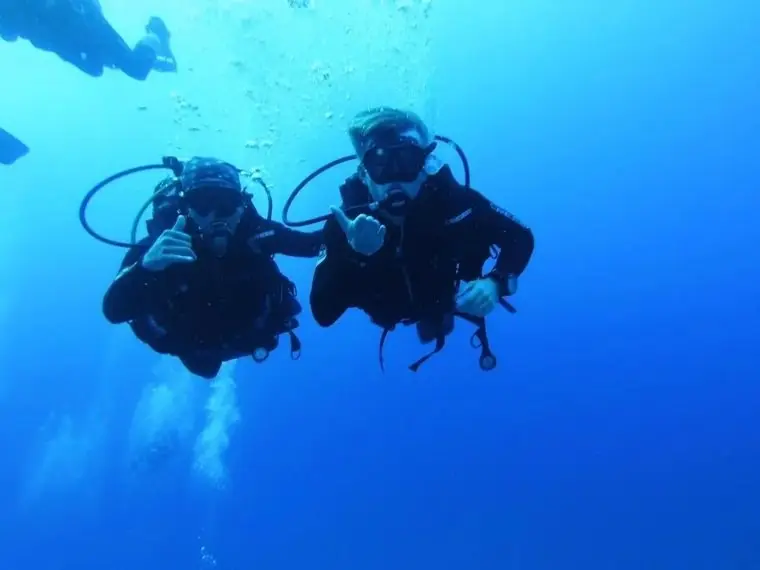
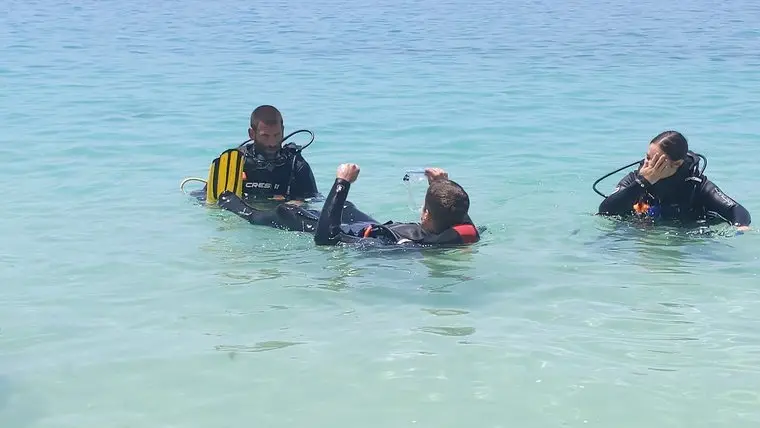
If you would rather be in the water than behind glass, the island's diving is unusually good value for a first attempt. A three-hour try dive in Puerto Rico is €89, never more than four people to one instructor, from 10 years old, with equipment, insurance and tax inside the price.
On the east coast, in the El Cabrón marine reserve near Arinaga, two shore dives cost €100 including hotel collection. The full picture is on the Gran Canaria diving page.
How the island splits your days
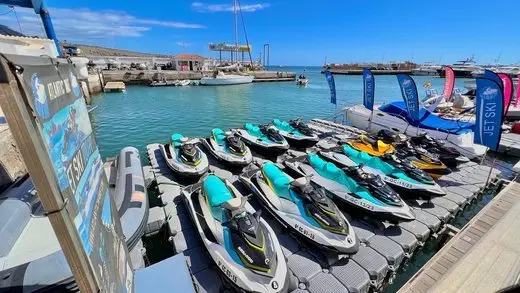
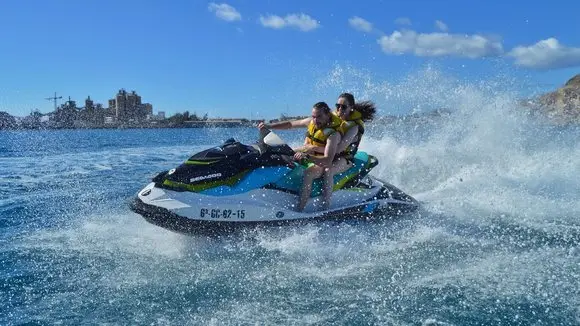
Everything that floats is in the south. Puerto Rico, Puerto de Mogán and the Pasito Blanco marina hold the boats, the dive centres, the jet skis and the parasailing.
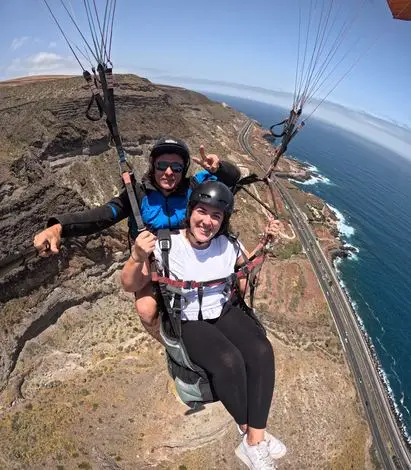
Three bases sit outside that strip: the dive centre at Arinaga on the east coast, the wind centre at Pozo Izquierdo further south on the same coast, and the two paragliding schools in Las Palmas at the far north end, whose tandem flights over the Las Canteras coast start at €70. That is a day in the capital, not an add-on to a beach afternoon.
Can you see the island properly in a week?
Comfortably. Two days in the south with one boat trip, one day inland for Roque Nublo, one day in Las Palmas — and one morning left over for the dunes before the heat.
Which single trip shows the most?
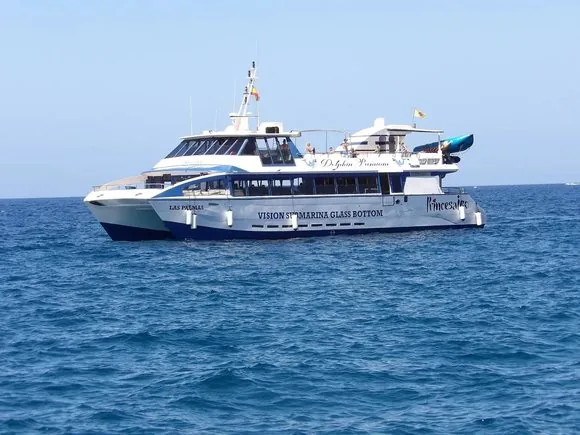
The Güigüí yacht, because it covers the piece of coastline that cannot be reached any other way. If the budget is tighter, the Princesa Ico catamaran at €55 gives four hours, a swim stop and lunch from Puerto Rico.
Is the north worth the drive?
For Las Canteras and the old town of Las Palmas, yes — and it is where the paragliding is. Everything else on the coast programme is closer to Maspalomas.
Updated 3 September 2026. Prices, durations, ages and inclusions are taken from the operators' own pages.