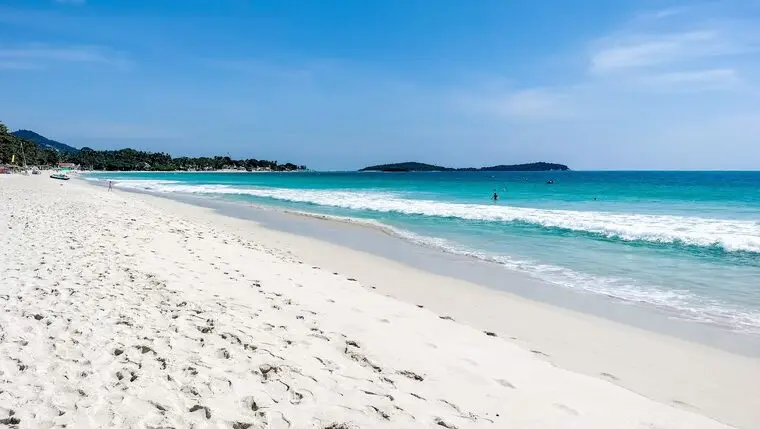
Koh Samui sits in the Gulf of Thailand, not the Andaman Sea, and it keeps its own calendar. Phuket is wet from May to October, taking 237 to 350 mm a month. From May to September Samui gets three to four times less rain than it does in November, its wettest month of the year.
So Phuket logic does not transfer. Bring it here and you will land in exactly the weeks the island treats as low season. What follows is twelve months read against four things you can measure: rain, water, air and wind.
In short
dry in February, March and April; wet in October, November and December; the sea is warm all year. Every number below is a long-run average from a climate archive, and each table names its source. None of it is a forecast for your date.
When is the best time to visit Koh Samui?
February to April. February averages 4.3 days of rain in the month, March 4.7, April 6.1. November has 16.5 — more than half the month.
Sea temperature plays no part in the choice at all. The coldest month is January at 27.9 °C; the warmest is May at 30.5 °C. Two and a half degrees separate the best month from the worst, and both are warmer than a swimming pool.
Why is November wetter than July?
November drops 444.6 mm on Samui — more than February, March and April combined. October (294.9 mm) and December (263.1 mm) come next. This is the north-east monsoon, which reaches the Gulf's eastern shore late in the year.
Set against that, the summer months look modest: July 117.0 mm, August 102.2 mm. Summer still has ten or eleven rain days a month, but half the water falls. The gap between ten wet days in August and sixteen in November is also a gap in how hard it rains each time.
| Month | Sea, °C | Air by day, °C | Rainfall, mm | Rain days | What it means |
|---|---|---|---|---|---|
| January | 27.9 | 29.0 | 126.8 | 8.5 | Tail of the wet season, the sea still restless |
| February | 28.2 | 29.4 | 64.3 | 4.3 | The driest month of the year |
| March | 29.0 | 30.4 | 115.8 | 4.7 | Dry, and the swell has settled |
| April | 30.1 | 31.8 | 82.9 | 6.1 | Lightest wind of the year, hottest air too |
| May | 30.5 | 32.9 | 131.6 | 11.0 | Sea at its annual warmest, rain returning |
| June | 30.2 | 32.7 | 133.6 | 10.3 | The wind swings to the south-west |
| July | 29.8 | 32.3 | 117.0 | 10.7 | Windy, but the sea stays flat |
| August | 29.5 | 32.4 | 102.2 | 10.5 | The windiest month: 17.1 km/h on average |
| September | 29.4 | 31.9 | 117.5 | 10.6 | Much like August, wind easing slightly |
| October | 29.1 | 30.6 | 294.9 | 15.8 | The wet half of the year begins |
| November | 28.7 | 29.7 | 444.6 | 16.5 | Wettest month; Ang Thong is closed |
| December | 28.1 | 29.3 | 263.1 | 11.6 | Less rain, but the swell peaks |
Air and rainfall — WMO Climatological Standard Normals 1991–2020, station KO SAMUI (WMO 48550). Sea — NOAA OISST v2.1, mean of 1995–2024. These are long-run averages, not a forecast for a given day. Data retrieved 1 September 2026.
Wind and swell: two monsoons in one year
On Samui the wind changes direction more than it changes strength. From November to February it blows from the east and north-east: 67° in November, 94° in January. From June to September it comes from the west-south-west, around 250°. Two quiet months sit between the monsoons: April (12.3 km/h) and October (12.9 km/h).
The swell follows the wind. The sea is at its roughest from November to January: mean wave height 0.63–0.67 m and eight to ten days a month when the daily maximum passes a metre. From May to October there are, on average, no such days at all.
| Month | Wind, km/h | Blowing from | Days with wind ≥ 20 km/h | Wave, m | Days with wave ≥ 1 m |
|---|---|---|---|---|---|
| January | 15.5 | E (94°) | 7.1 | 0.64 | 8.3 |
| February | 15.6 | ESE (115°) | 6.5 | 0.57 | 6.7 |
| March | 14.5 | ESE (123°) | 5.5 | 0.49 | 2.0 |
| April | 12.3 | SE (135°) | 1.8 | 0.26 | 1.3 |
| May | 13.7 | SW (235°) | 5.2 | 0.24 | 0.0 |
| June | 15.5 | WSW (249°) | 7.6 | 0.27 | 0.0 |
| July | 16.4 | WSW (250°) | 9.6 | 0.34 | 0.3 |
| August | 17.1 | WSW (255°) | 10.9 | 0.29 | 0.0 |
| September | 16.0 | WSW (258°) | 9.5 | 0.32 | 0.0 |
| October | 12.9 | WNW (284°) | 4.5 | 0.21 | 0.0 |
| November | 14.8 | ENE (67°) | 6.3 | 0.63 | 10.0 |
| December | 16.8 | ENE (61°) | 9.4 | 0.67 | 8.0 |
Wind — ERA5 reanalysis (Copernicus / ECMWF) via Open-Meteo, point 9.512 N / 100.014 E, mean of 1995–2024; direction is where the wind blows from. Waves — Open-Meteo Marine Weather API, point 9.55 N / 100.15 E, 2023–2025 only: three years, so the rows compare months with each other rather than stand as a wave norm.
What closes with the season?
Important
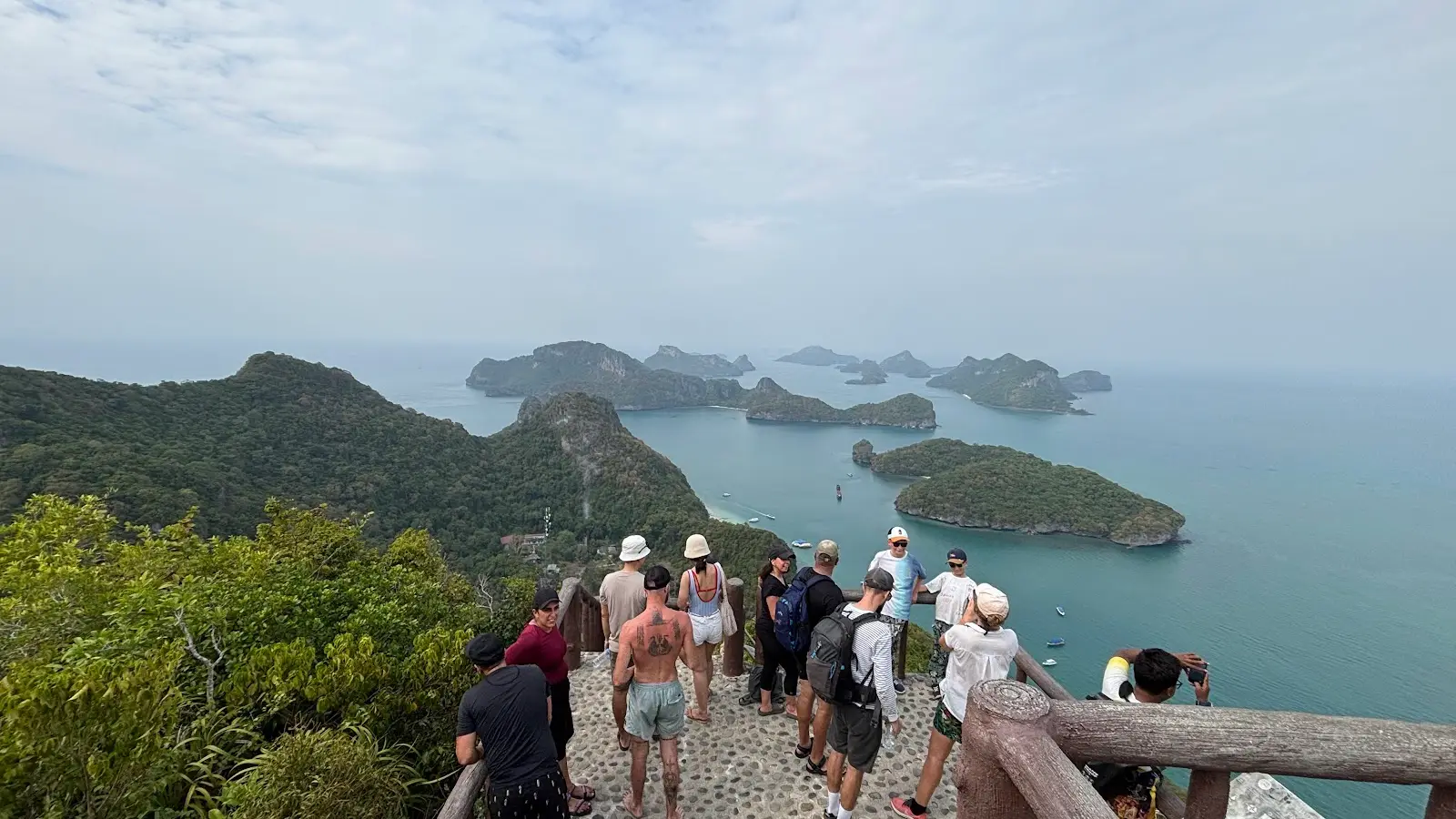
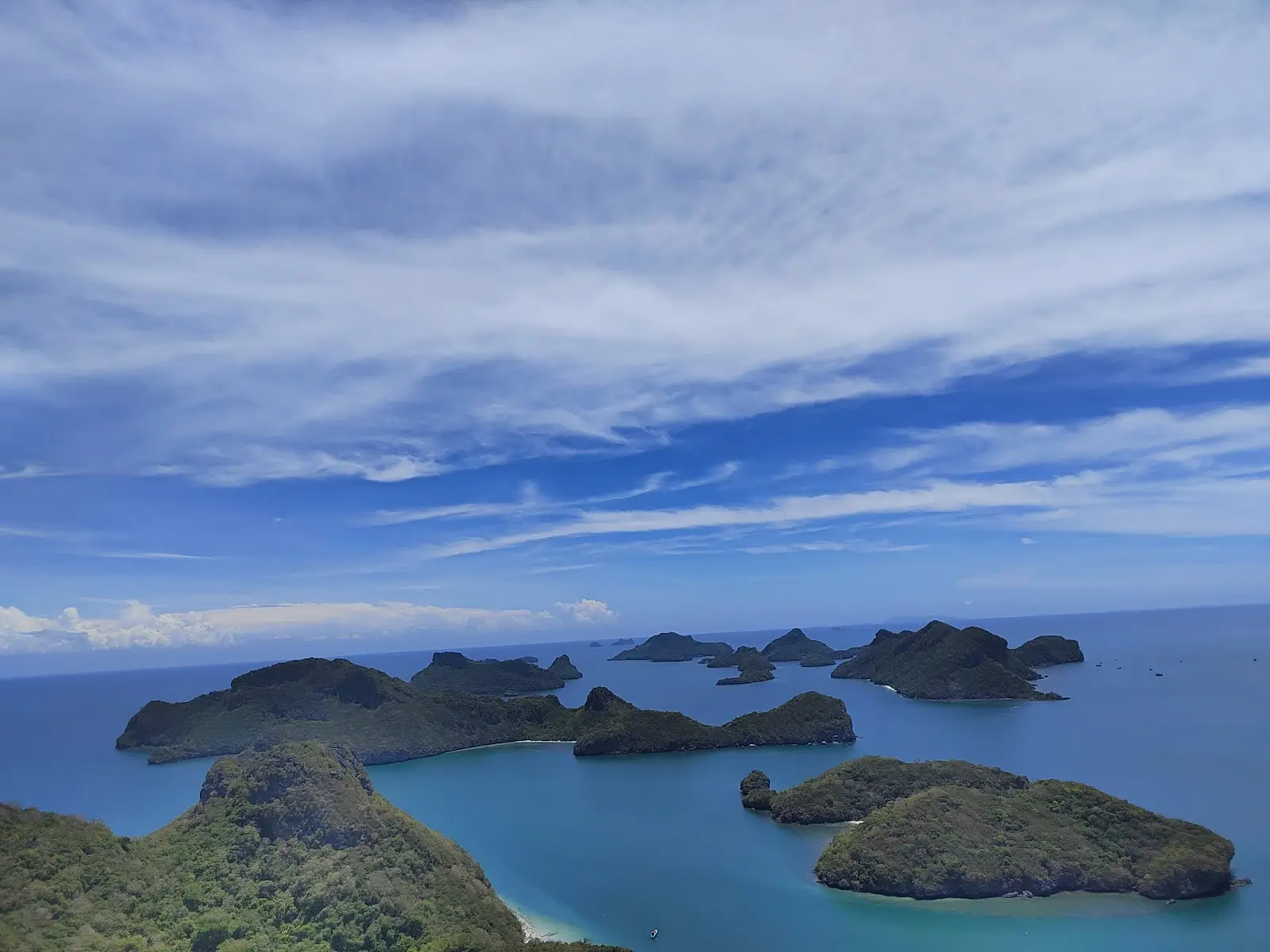
Ang Thong National Marine Park is closed from 1 November to 15 December every year. That is not a weather caveat or one operator's decision — for those six weeks nobody runs trips into the park, and they land squarely on the wettest month.
A full day of sea kayaking in Ang Thong with Bluestars Kayaking starts at ฿2,800 ≈ $78 per person for eleven hours, marine park fee included; the boat leaves Nathon pier at 08:00. The speedboat version of the same day starts at ฿2,300 ≈ $64 per person plus a ฿300 ≈ $8 park fee paid on the day, eight hours out of Bangrak pier.

Kite: the windiest months on record
In the ERA5 record the windiest months are August (10.9 days averaging 20 km/h or more), July (9.6) and September (9.5), and among the winter months December (9.4). April is close to still by comparison: 1.8 days in the month.
Tip
the Mahalo school at Hua Thanon, on the island's south-east coast, states hours of 09:00–18:00 daily; the three-hour discovery session is ฿7,000 ≈ $194, private instructor and equipment included. Which of the two monsoons suits their spot better we confirm with the school when you book.

Diving: no seasonal caveat at all
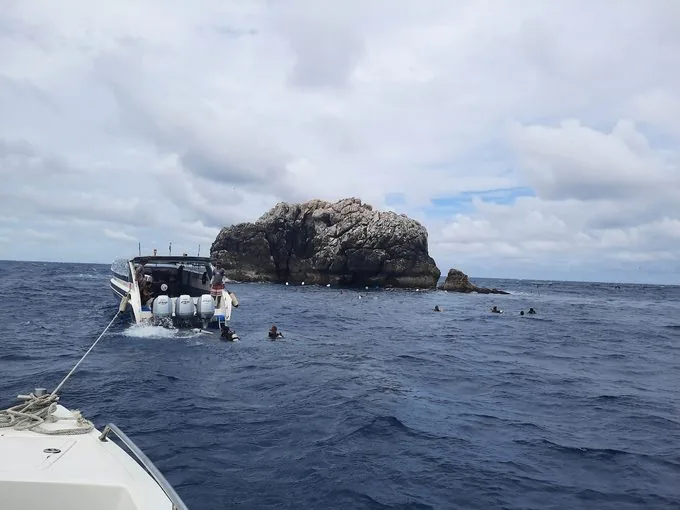
Dive trips from Samui carry no month restrictions in their conditions. Two dives at Sail Rock with Silent Divers start at ฿4,650 ≈ $129 per person — a full day of about eight hours, hotel pickup at 07:45 and departure at 09:00; certification required.
Beginners get Koh Tao instead of Sail Rock: a try dive off Koh Tao runs two supervised dives to 12 metres with a maximum of two students per instructor, ฿5,900 ≈ $163 per person. If you would rather stay on the surface, there is a snorkelling place on the dive boat — ฿2,900 ≈ $80 per participant, lunch included.
Koh Samui weather month by month: our own reading
What follows is not a claim by any source but our conclusion drawn from the tables above. A month scores four marks: sea at 22 °C or warmer, daytime maximum at 35 °C or lower, calm sea (mean wave up to 0.5 m and no more than five days with a one-metre maximum) and dry (no more than six rain days). Four out of four is high season, three is shoulder, two or fewer is low.
- High: March — the only month that takes all four marks.
- Shoulder: February, April, May, June, July, August, September, October.
- Low: January, November, December — rough sea and rain at the same time.
February loses one mark on swell alone: 6.7 days with a one-metre maximum against a threshold of five. April loses one on rain alone: 6.1 days against a threshold of six. That is why the dry season here is described in practice as February to April, even though formally only one month scores high.