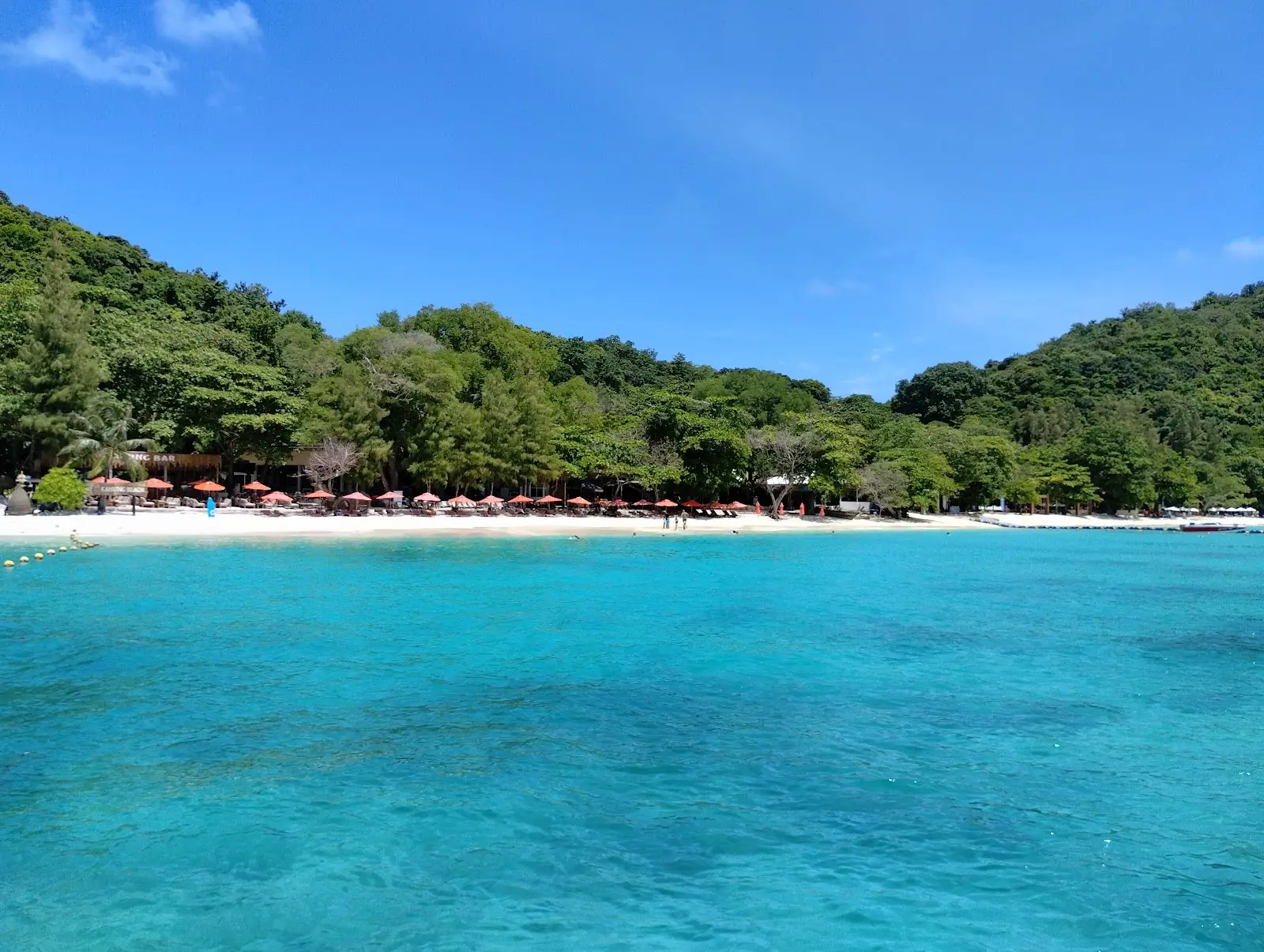
Phuket sits in the Andaman Sea, and its calendar is the mirror image of Samui's. The driest month here is February, with 31.6 mm of rain. The wettest is October, with 314.6 mm — ten times as much.
But what decides your month on Phuket is not the rain, it is the swell. From May to September the south-west monsoon works the open sea: in July the daily maximum wave height passes one metre on an average of 27 days out of 31. In December that count is effectively zero.
In short
dry and calm from December to March; wet from May to October; the water is warm all year. Every figure below is a multi-year average, with the sources named under the tables. It is not a forecast for your date.
When is the best time to go to Phuket?
December to March. February averages 6.0 rain days a month, January 9.2 and March 12.4. October has 28.0 — very nearly the whole month.
Sea temperature plays no part in the choice. The coldest water of the year is September's, at 29.1 °C, and the warmest is May's, at 30.9 °C. Less than two degrees separate the best month from the worst, and both are warmer than a swimming pool.
Why does it rain on Phuket in summer rather than winter?
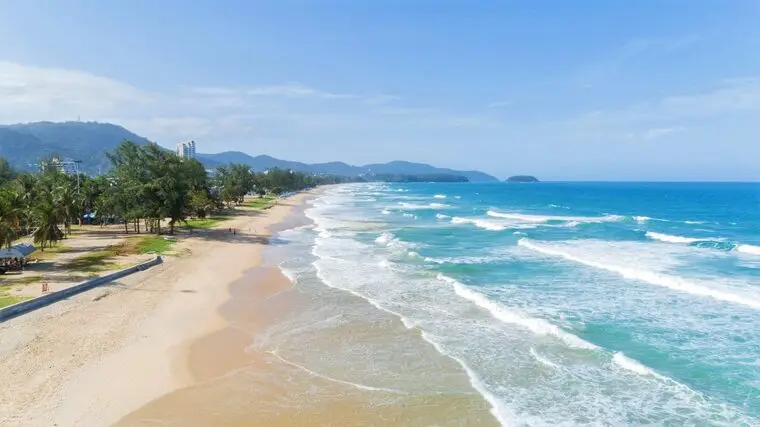
Phuket faces west, straight into the Andaman Sea. The south-west monsoon arrives in May and holds until October: the wind swings from north-east to west, and it brings both the rain and the swell. The north-east monsoon from November to March blows off the land instead, and the island sits in its wind shadow.
That is where the numbers come from. May to October delivers 1,588 mm, November to April 661 mm: the dry half of the year gets less than half the water of the wet half. The sharpest step is between April (151.6 mm) and May (269.0 mm) — rainfall almost doubles in a single month.
| Month | Sea, °C | Air by day, °C | Rain, mm | Rain days | What it means |
|---|---|---|---|---|---|
| January | 28.9 | 28.8 | 51.7 | 9.2 | Dry, flat sea, high season |
| February | 29.3 | 29.5 | 31.6 | 6.0 | The driest month of the year |
| March | 29.8 | 30.0 | 92.7 | 12.4 | Still dry, but the rain is returning |
| April | 30.6 | 29.9 | 151.6 | 20.2 | Hottest month, quietest sea |
| May | 30.9 | 29.4 | 269.0 | 25.0 | Monsoon turns, the Similans close |
| June | 30.1 | 29.0 | 240.4 | 22.3 | Swell has reached its yearly level |
| July | 29.7 | 28.7 | 222.5 | 23.1 | The biggest swell of the year |
| August | 29.9 | 28.5 | 248.4 | 23.2 | Maya Bay closed for the whole month |
| September | 29.1 | 28.2 | 293.4 | 24.5 | Maya Bay closed, swell still high |
| October | 29.4 | 28.1 | 314.6 | 28.0 | Wettest month; the Similans open on the 15th |
| November | 29.6 | 28.3 | 230.7 | 23.5 | Rain lingers, but the sea has settled |
| December | 29.1 | 28.4 | 103.5 | 13.5 | Dry season begins, flattest sea of the year |
Air, rain and wind — ERA5 reanalysis (Copernicus / ECMWF) via Open-Meteo, point 7.9 N / 98.3 E, averaged over 1995–2024. A "rain day" is a day with at least 1 mm; a reanalysis counts drizzle more generously than a ground station, so compare these days between months rather than against someone else's table. Sea temperature and waves — Open-Meteo Marine, point 7.9 N / 98.15 E, 2023–2025. Data retrieved 3 September 2026.
Wind and swell: why May changes the sea
On Phuket the swell matters more than the rain. A tropical downpour lasts forty minutes; a swell stands for weeks, and it is the swell that cancels departures, makes guests seasick and puts the red flags out on the beaches.
From December to April the average daily maximum wave is 0.55–0.66 m, with nought to two days a month above one metre. From June to September the average maximum is 1.25–1.46 m, and there are 21 to 27 metre-plus days out of thirty.
That is the same shift that moves the boats from the west coast to the east: Phuket's marinas — Boat Lagoon, Royal Phuket Marina, Ao Por — sit on the sheltered side, and in the wet months a departure from there is softer than one from Chalong.
| Month | Wind, km/h | Blowing from | Days with wind ≥ 20 km/h | Wave, m | Days with wave ≥ 1 m |
|---|---|---|---|---|---|
| January | 21.4 | ENE (64°) | 17.1 | 0.66 | 1.7 |
| February | 21.1 | ENE (62°) | 15.4 | 0.63 | 2.0 |
| March | 19.4 | NE (35°) | 13.1 | 0.55 | 1.0 |
| April | 17.1 | NNW (345°) | 8.1 | 0.57 | 1.0 |
| May | 19.8 | W (264°) | 13.9 | 0.99 | 15.0 |
| June | 21.5 | WSW (256°) | 15.8 | 1.35 | 24.3 |
| July | 22.3 | WSW (254°) | 18.0 | 1.46 | 27.3 |
| August | 23.0 | W (263°) | 19.0 | 1.25 | 21.3 |
| September | 21.8 | W (273°) | 17.0 | 1.46 | 23.3 |
| October | 19.0 | NW (307°) | 12.4 | 0.88 | 10.3 |
| November | 18.3 | NE (51°) | 11.4 | 0.68 | 4.0 |
| December | 21.0 | NE (57°) | 17.5 | 0.61 | 0.3 |
Wind — ERA5 via Open-Meteo, direction given as "blowing from", averaged over 1995–2024. Waves — Open-Meteo Marine Weather API for 2023–2025: three years, so the rows are good for comparing months with each other but not as a wave climatology.
What closes on Phuket, and when?
Important
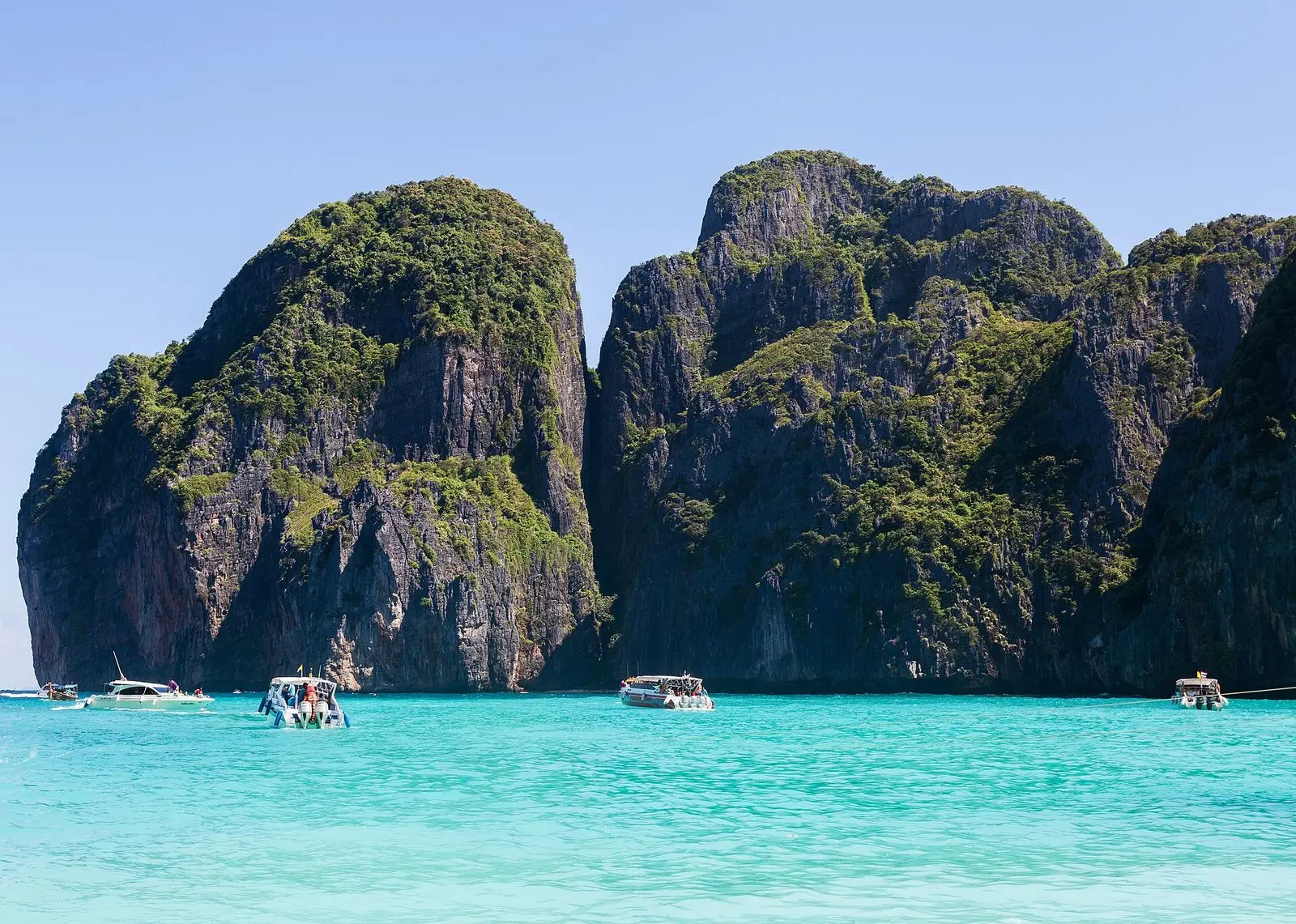
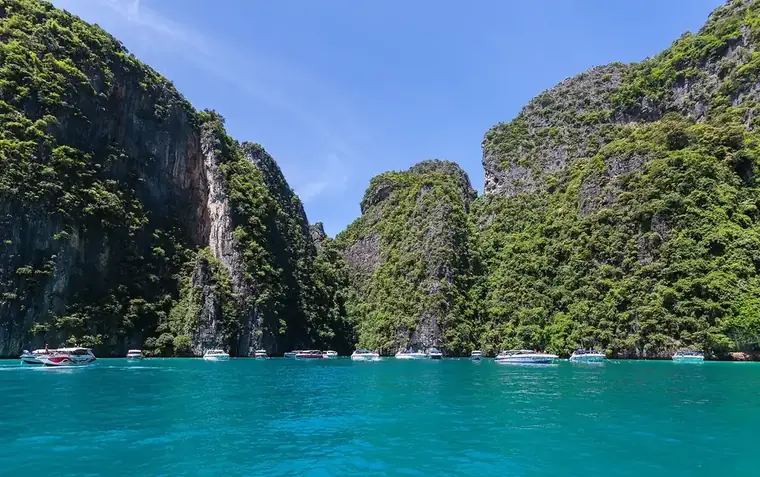
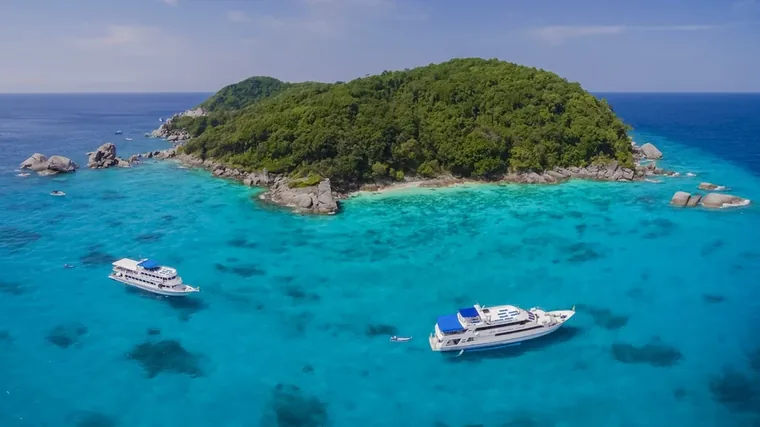
two closures are fixed and have nothing to do with the weather. The Similan Islands are open only from 15 October to 15 May — for the other five months nobody goes into the park. Maya Bay closes for ecosystem recovery every August and September: in 2026 from 1 August to 30 September, reopening on 1 October.
The Similan diving day runs from ฿4,900 ≈ $136 per person plus a ฿700 ≈ $19 park fee; it leaves from Thap Lamu rather than Phuket and takes about twelve and a half hours. The snorkelling version of the same day is from ฿3,490 ≈ $97 per person, ten hours, no certificate needed. Both exist only inside the 15 Oct – 15 May window.
The rainy season: what still runs
Tip
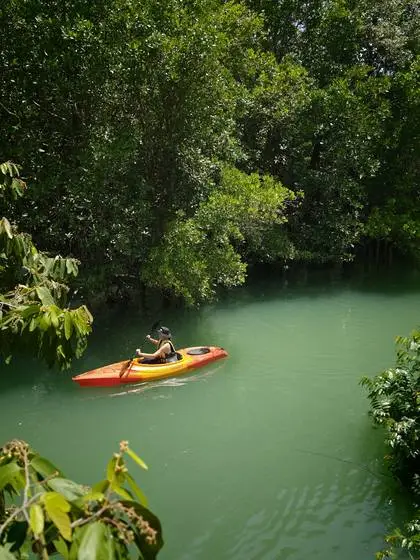
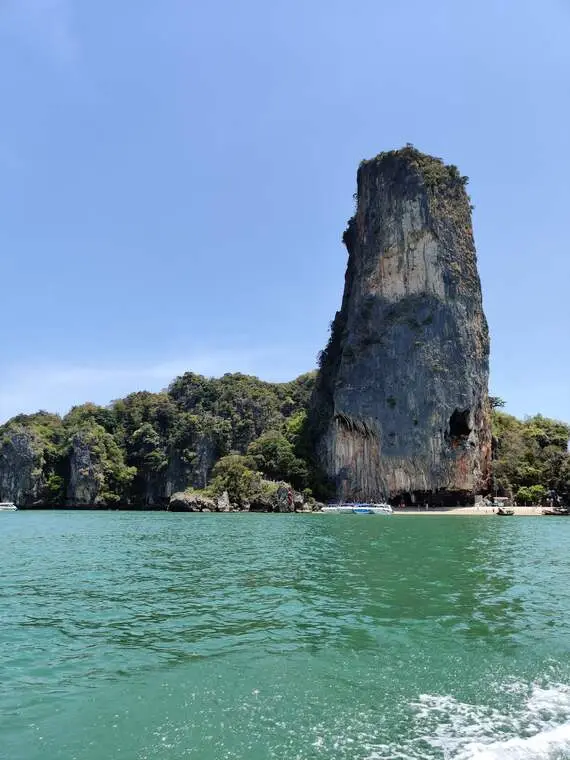
in the wet months pick the sheltered routes. Phang Nga Bay is screened from the west by a chain of islands, and the small-group James Bond Island day at ฿4,500 ≈ $125 per person runs there while the open sea is already lumpy. The same logic applies to the mangrove kayaks on the east coast: THINN's trip at Tha Maphrao from ฿1,000 ≈ $28 is timed to the tide, not to the swell.
Phi Phi runs all year, but from June to September the crossing is the same 45 kilometres through a metre and a half of swell. If you get seasick, take Phang Nga in those months.

Which month fits your plan?
- The Similans and the clearest water. February to April: the park is open, 6.0–20.2 rain days, swell under 0.6 m.
- Maya Bay. Any month but August and September; December to March is better, because the crossing is calm.
- Cheaper and less crowded. May to October: green-season pricing, but pick your sea days off the forecast.
- Jet skis and small craft. November to April: 0.55–0.68 m of swell against 1.25–1.46 m in summer.
- The flattest sea of the year. December: 0.3 metre-plus days in the month — the annual minimum.
How do you book around your month?
Send your travel dates on WhatsApp or Telegram — we will tell you what is open on your dates, what falls inside a park closure, and confirm the boat at the operator's price.